Uruguay Day Trip From Buenos Aires: Colonia de Sacramento
Now Go See It is reader-supported. When you buy through links on our site, we may earn an affiliate commission.
Uruguay day trip from Buenos Aires on Colonia Express: Terminal info, ticket costs, tour and lunch notes, plus a one-day Colonia del Sacramento itinerary.
Colonia del Sacramento from Buenos Aires: (Jump To)
How to Visit Uruguay From Buenos Aires - Video Guide

What to Know Before Visiting Colonia del Sacramento, Uruguay
A day trip to Uruguay from Buenos Aires works best when you treat the Colonia Express ferry like a small airport run, not a casual boat ride. Check the Colonia del Sacramento weather before you go, because wind and rain change how much you’ll want to be outside by the water.
Colonia del Sacramento is compact, and the historic area is the main reason you came. You do not need a car for a one-day visit, but you do need to stay aware of the ferry schedule and return check-in timing. You’ll be crossing an international border twice, so bring your passport, and make sure your ticket name matches exactly.
If you’re trying to keep the day easy, booking a package that includes the ferry, a tour, and lunch removes a lot of decision-making. More on that below.
Surprisingly, there were no USB charging ports on the ferry. A small power bank is the unglamorous hero of the day, because you’ll be using maps, taking photos, and watching the clock.
Is Colonia del Sacramento Safe?
Most visitors spend their day in the historic center, and it’s generally low-drama for travelers doing a Colonia del Sacramento day trip. Basic travel rules still apply, especially around terminals and crowded photo stops.
The old town is busy with tour groups, and that’s usually a good thing for comfort and navigation. Keep your phone secure on the cobblestones, because one slip and it can bounce in a way that feels personal. Watch for opportunistic pickpocketing in any crowd, but this is not a place where you should be constantly on edge. If you’re going beyond the historic quarter, use a taxi or rideshare to save time and avoid wandering aimlessly.

Airline Miles and Hotel Points 101
We share tips and tricks for credit card points and miles. These tools help us save money on our trips around the world by allowing us to accumulate airline and hotel points.

How To Get Around Colonia del Sacramento?
The best way to cover the Barrio Histórico is on foot, and a Colonia del Sacramento map makes it easier to loop the sights without doubling back. The area is quite small and very easy to traverse on foot.
Inside the historic quarter, walking is the whole point, and you’ll be stopping constantly anyway. Cobblestones slow you down more than you expect, so wear shoes you trust. For the outer sights, renting a golf cart is the “cover more ground fast” option that still feels fun and low-effort. If you booked a tour, follow the guide’s pacing early on, then do your own side quests later once you know where everything is.

How the Colonia Express Ferry Works for a Buenos Aires to Uruguay Day Trip
Colonia Express is the fast, straightforward way to do a Buenos Aires to Colonia del Sacramento ferry day trip. You book a ticket, show up early, check in, clear exit/entry formalities, board, and then you land in Colonia ready to start walking.
The key is timing. You’re crossing an international border, so the line situation can change depending on the season, the day of the week, and how many people choose the same departure as you. This is not the day to test how late you can arrive and still make it. Plan to be at the terminal early enough to check in calmly, not sprinting with your passport in your hand like you’re in a movie. Once you’re through the formalities, the rest of the day is easy.
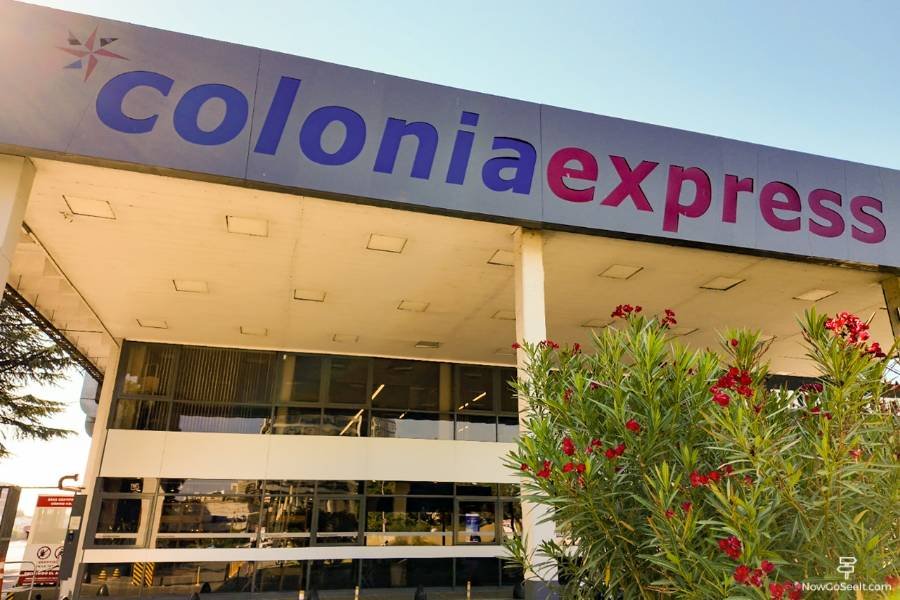
Colonia Express Terminal Buenos Aires: Where to Catch the Ferry
Puerto Madero Sur Port: Google Maps
Colonia Express website: Link
Tickets with Optional Tour: GetYourGuide
Colonia Express departs from Puerto Madero Sur in Buenos Aires. The terminal location is the practical detail that matters most, because you want your rideshare dropping you at the correct place the first time. If you are staying in central Buenos Aires, rideshare or a taxi is the simplest option, especially early in the morning. Give yourself buffer time for traffic and for the “I think this is the entrance” moment, because ports can be confusing even when you know what you’re doing.
Inside, it runs like a small airport: counters, lines, waiting area, announcements, and everyone checking their watch. You’ll show your ticket, then go through both Argentina and Uruguay customs. Keep your passport and your ticket confirmation together and easy to grab without unpacking your whole bag. Once you’ve completed check-in and immigration, you’ll wait in a no-frills waiting area with restrooms and a coffee shop with light sandwiches and various drinks.

Colonia Express Uruguay Tickets, Prices, and What I Booked
Colonia Express Uruguay prices vary by date, time, and what you bundle, so there is no single “this is what it costs” number that stays true all year. The better way to think about it is options: basic ferry seats, round-trip tickets, and packages that add a tour, lunch, and sometimes transfers.
I booked a one-day ticket that included the guided tour and lunch, plus round-trip transportation on the ferry. Final cost after currency conversion was US$85. (Check the price and options on GetYourGuide or the Colonia Express Page). That bundle was worth it for how clean the logistics felt, because I did not have to build my own schedule from scratch or waste time debating where to eat. It also keeps the day moving, which matters when you are working around a fixed return sailing.
You can also compare similar Colonia del Sacramento day tour packages through Viator or GetYourGuide and pick the one that matches your timing.
Colonia Express Galerías Pacífico Tickets: Buying in Person vs Online
Tickets are available online, and they’re also sold at official points of sale in Buenos Aires, including the booths at Galerías Pacífico mall. If you like having a person confirm what you’re buying, the Galerías Pacífico option is convenient if you are already downtown.
If you book online, save your confirmation where you can reach it fast and do not rely on spotty signal at the port. If you buy in person, double-check that you are purchasing the exact product you want: same-day round trip, your correct departure time, and any tour or lunch inclusions.
Also, confirm whether your package has a specific meet point in Colonia after you arrive, because that’s the one detail that can trip people up when they step off the boat and immediately start taking photos. The guided tour starts from the Uruguay side, so don’t be surprised if there isn’t a meeting point until you’ve disembarked at the Colonia port.
This is a border-crossing day, so keep your name formatting consistent with your passport. Once you have your ticket locked, the rest of the trip becomes a simple “follow the system” routine.

Check out our other posts about things to see and do in Buenos Aires or Argentina!
Or visit our Destinations page to be inspired.
Colonia del Sacramento Itinerary: Things to Do in One Day
The timestamps below assume a typical morning departure and evening return. Adjust the times to match your sailing, but keep the order, because it reduces backtracking and keeps you close to the port when you need to head back.
8:00 AM – Arrive at the Colonia Express Buenos Aires terminal in Puerto Madero Sur with enough time to check in and clear formalities without rushing.
Colonia Express Buenos Aires Terminal (Puerto Madero Sur)
Map: Google Maps
Website: Link
This terminal sets the tone for the whole day, and the winning move is arriving early with your documents ready. It feels like a smaller version of an airport, with check-in counters, lines, and a waiting area full of people doing the same math you’re doing. Keep your passport and confirmation easy to access so you’re not unpacking your bag in the middle of a queue. The good news is that once you’re checked in and through customs and immigration, your hardest job is done for the day.
9:15 AM – Board the ferry and use the ride to confirm your plan and return timing.

Colonia Express Ferry Crossing on the Río de la Plata
The ferry ride is the calm part of the day, and it’s your reset before you hit cobblestones and photo stops. Grab a seat and take a quick look at your return ticket so you know exactly what time you need to be back. The Río de la Plata is wide enough that it feels like open water, which is a fun reminder that you really did leave Argentina for the day. If you booked a tour, this is a good time to re-check the meet instructions so you don’t step off the boat and immediately wonder where everyone went. If you’re doing this independently, pin the Colonia port on your map now so you can always find your way back. It’s also a good moment to eat a snack from the onboard cafe or the duty free shop.
This is another reminder that USB charging ports are not available on the ferry, pack A small power bank.
10:45 AM – Walk straight into the old town loop and start with the major entrance point.

Portón de Campo
Map: Google Maps
Portón de Campo is the clearest “you are now entering the old city” marker in Colonia. The Barrio Histórico is a UNESCO World Heritage Site because it preserves a rare mix of Portuguese and Spanish colonial planning, and this gate is your physical transition line into that story. Colonia was founded by the Portuguese in 1680, and for decades control bounced between Portugal and Spain, which is why the neighborhood layout does not feel like a clean Spanish grid. This gate and the wall fragments around it point to Colonia’s original purpose: a fortified settlement guarding a strategic position on the Río de la Plata, not a town designed for visitors with cameras. What you see today includes restoration, but it still communicates the footprint of the defenses and the “inside/outside” logic of the old quarter. Take a minute to look at the thickness of the stonework and the way the entrance funnels you into narrow lanes, because it explains the scale of everything that follows. This is also a great navigation reset point later, since it is one of the easiest landmarks to find without thinking too hard.
Before you head deeper, look for the UNESCO marker nearby so the designation feels tied to a real place you are standing in, not a line of text you read on a brochure.
There are also free public restrooms nearby.
11:15 AM – Hit the most photographed street early, before it becomes a traffic jam.

Calle de los Suspiros
Map: Google Maps
Calle de los Suspiros is one of the most iconic streets in Colonia del Sacramento because it preserves the look and scale of the earliest colonial period in the Barrio Histórico. This lane is often described as “typically Portuguese” in its layout and original paving, which is a useful clue for understanding why Colonia feels different from many Spanish-planned colonial cities with tidy grids. The street’s narrow width, stone surface, and simple façades reflect a fortified settlement that grew in layers, shaped by decades of rivalry between Portuguese and Spanish powers rather than a single master plan. What makes it important is not just that it’s photogenic, but that it’s a rare, intact snapshot of how the old quarter functioned day-to-day—compact, practical, and built around durability. Take a minute to look at the street itself, not just the buildings: the original paving and the channel running through the middle show how water was managed in a low-lying riverside town long before modern infrastructure. It’s also a good place to notice the small architectural details—doors, ironwork, rooflines, and the way the buildings sit close to the street—because those details are exactly what helped earn UNESCO recognition for the historic quarter as a well-preserved example of a colonial town shaped by competing empires.
11:40 AM – Move toward the center of the old town and use it as your reset point.
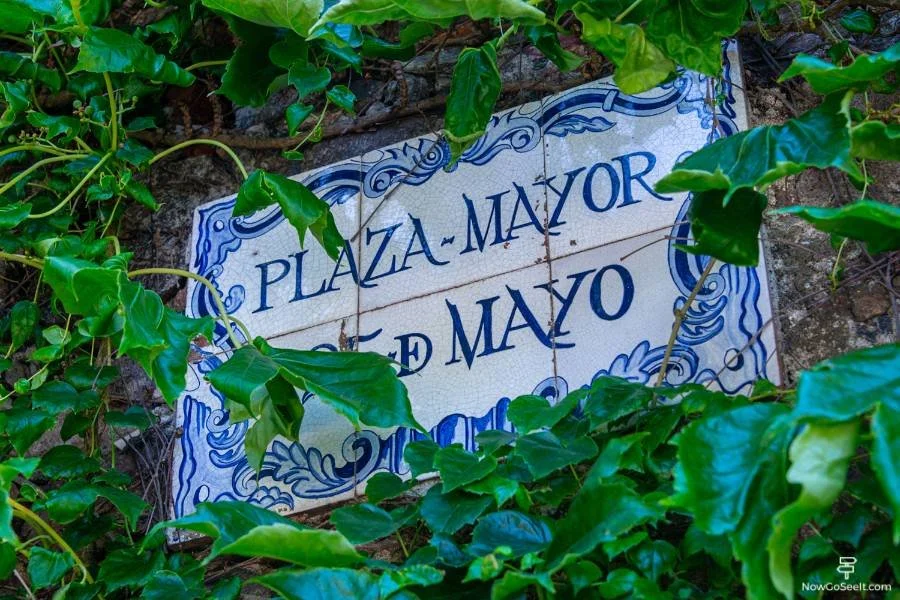
Plaza Mayor
Map: Google Maps
Plaza Mayor is where Colonia’s layers become easier to read without a guide. This open space has been part of the town’s structure since the early settlement period, and historically, it was used for civic life and even military exercises. The buildings and street edges around the plaza show the architectural mix that makes Colonia different: Portuguese influence sitting next to later Spanish changes, and then modern tourism stitched on top. It is also a practical reset because multiple key sights are within a few minutes, so you can decide what to do next without feeling like you are breaking the route. If you want an establishing shot that reads “we are in Colonia,” this is the easiest place to get it without fighting for space. The plaza also makes it obvious that the old town is not a museum sealed off from real life; you will see guides, visitors, and locals all using the same space. This is a good place to check your timing and decide if you are adding one museum later or keeping it fully outdoors. If you are souvenir shopping today, this is an efficient area to do it without turning it into a separate mission.
12:00 PM – Keep it simple and do the main church stop quickly.

Basílica del Santísimo Sacramento
Map: Google Maps
The Basílica del Santísimo Sacramento matters because it ties Colonia’s earliest settlement era to the town you are walking through today. The parish history goes back to the first decades of Colonia, and the building you see now reflects rebuilding and expansion over time rather than a single untouched moment. A major phase of construction happened in the early 1800s, and the structure was later restored, which is why it reads as both historic and maintained. Architecturally, it is straightforward, but that is part of the point: this is a working landmark in a small colonial town, not a cathedral built to flex on everyone. Step inside if it is open, because the interior gives you a quick contrast to the constant outdoor walking and stone textures.

When you exit, do not miss the Instagram-famous old cars with plants growing out of them that pop up around the historic streets nearby. It is a silly little detour photo that somehow always ends up being one of the most recognizable shots in people’s Colonia albums.
12:20 PM – Head toward the waterfront landmarks and the ruins area.

Faro de Colonia del Sacramento
Map: Google Maps
The lighthouse is one of the most useful “history in one frame” stops in Colonia because it stacks time periods on top of each other. The tower dates to the 1800s, but it sits beside the ruins of the Convento de San Francisco, which was built in the late 1600s and later destroyed by a fire in the early 1700s. That ruins-and-lighthouse combination is not just aesthetic; it is literally the town’s long timeline sitting in the same small patch of ground. The lighthouse has been in service since the 1800s, and it is still a functioning aid to navigation, which helps it feel like more than a photo prop. If it is open to climb, it is one of the quickest ways to get a view over the old quarter without committing to a long activity. Even if you do not go up, the surrounding space is packed with angles: stone ruins, tower geometry, and the Río de la Plata right there.
1:00 PM – Do the included lunch, then get back out quickly so you keep the afternoon.
Lunch from the Colonia Express Tour Package
If your ticket includes lunch, take the win and treat it like a scheduled pit stop instead of a long production. In my one-day tour and lunch package, the restaurant name on the voucher was El Refugio, with choices from a set menu selection, which kept ordering fast. This is exactly what you want on a ferry day, because the clock is always running in the background. Use lunch to rest your feet, check your return timing, and make sure your phone still has battery. If lunch is not included, pick something close to the historic core.
2:00 PM – Walk off lunch along the waterfront.

Rambla de Colonia
Map: Google Maps
The rambla is where Colonia stops feeling like a tightly packed historic set and starts looking like a real town built along the water. Walking the waterfront makes the defensive logic of the old quarter click, because you see how the settlement relates to the river edge instead of just the lanes inside the walls. This stretch is also a nice visual reset after a morning of stone streets and tight corners, especially if you want more variety in your photos. If you are trying to pace the day, the rambla is a clean way to add distance without adding complexity. Depending on weather, this can be either a quick pass or a longer linger, but either way it breaks the day up nicely. If you rented a golf cart or bike, this is where it starts to feel worth it because you can cover more ground with less effort. The key is to enjoy the change of scenery without letting the waterfront eat the entire afternoon. We walked to Playa urbana El Alamo, then turned back to town.
3:00 PM – Choose one quick museum stop near the old town.

Museo del Azulejo
Map: Google Maps
Website: Link
Museo del Azulejo is a smart stop because it’s compact, visually interesting, and not a huge time commitment. The focus is decorative tile work, and even if you’re not a museum person, it’s easy to appreciate without needing a long explanation. The building itself has an old-house feel, which fits the historic quarter’s mood and makes it more than just “a room with objects.” This is also a great weather pivot: if it’s hot, windy, or raining, it gives you an indoor reset without derailing the itinerary.
4:00 PM – Head out to the larger, more modern landmark area.
Gral. Flores Shopping
Map: Google Maps
General Flores (Avenida General Flores) is the practical shopping stretch in Colonia del Sacramento when you want something beyond souvenir stalls in the Barrio Histórico. This is a main commercial artery that locals use for everyday errands, so the stores lean more functional than curated, with a mix of clothing shops, shoe stores, pharmacies, small electronics, and casual grab-and-go food. It’s a good place to browse without paying “historic center pricing,” and it’s where you’re more likely to find simple Uruguay staples—mate supplies, basic leather goods, and small gifts that feel normal instead of touristy. The vibe is more city shopping strip than old-town charm, which is exactly why it works as a change of pace in a one-day itinerary. If you want to bring something home that isn’t a magnet, this is a smart zone. It’s also a useful stop if you need a quick ATM, sunscreen, or a random travel fix you didn’t realize you needed until you were already out for the day. Pair it with a quick ice cream or pastry nearby, then loop back toward the port or the historic quarter, depending on your timing.
5:30 PM – Start heading back to the terminal early enough that you’re not gambling on the line situation.
On the walk back, be sure to visit:

Mercado Artesanal de Colonia
Map: Google Maps
Mercado Artesanal de Colonia is the easiest place in the Barrio Histórico to shop for souvenirs that look like you put in at least a little effort. It’s a cluster of artisan stalls selling the usual Colonia hits—mate cups and bombillas, leather wallets and belts, locally themed ceramics, textiles, small prints, and handmade jewelry—plus a few random items that you didn’t know you wanted until you saw them. The prices can vary stall to stall, so it’s worth doing one quick lap before you commit, especially if you’re buying leather goods or anything hand-painted. A lot of the best purchases here are small and packable. This market is also a good stop for gifts if you’re traveling with someone who wants to bring something back for friends or family without spending an hour shopping. If you like food souvenirs, keep an eye out for dulce de leche and alfajores nearby.
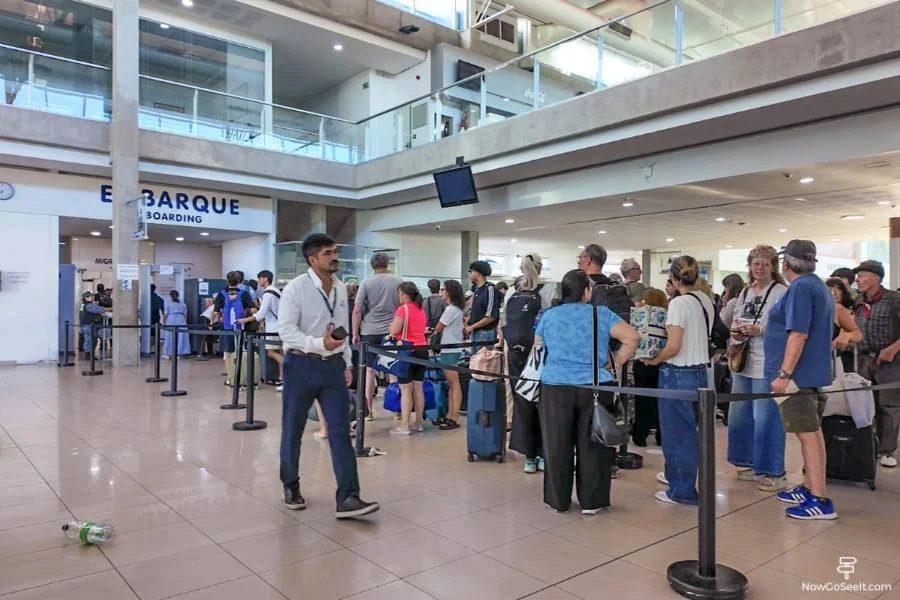
Colonia del Sacramento Port and Return Ferry Check-In
Map: Google Maps
The return trip is where people mentally treat Colonia like it is five minutes from everything, and that mindset is how you end up stressed. You still have check-in and border formalities to clear, and ferry boarding has a rhythm that does not care that you were “just finishing one last stop.” Heading back with a buffer lets you walk in like a competent adult instead of speed-walking through a crowd while trying to remember which pocket has your passport. Once you are through and seated, the pressure is off, and the day feels like it is officially complete. We timed the ride back during the sunset. It’s a perfect way to end the day in Colonia.


We’re on YouTube!
The same great content without all the pesky reading!
If You Have More Time in Colonia del Sacramento
Staying overnight changes the whole feel, because you can see the historic quarter early and late without day-trip crowds. This is also where Colonia del Sacramento hotels become relevant, and you can choose a place inside or near the Barrio Histórico so you’re not commuting around a tiny town. If you want an easy add-on, Carmelo is a solid next step for wineries and a slower pace without needing a big-city plan. If you want to keep building a Uruguay itinerary, Montevideo gives you a bigger-city contrast, and Punta del Este is the splashier beach option if your trip is longer.


Best Things To Do in Colonia del Sacramento
Colonia Express Ferry Crossing on the Río de la Plata
Portón de Campo
Calle de los Suspiros
Plaza Mayor 25 de Mayo
Basílica del Santísimo Sacramento
Faro de Colonia del Sacramento
Lunch from the Colonia Express Tour Package
Museo del Azulejo
Gral. Flores Shopping
Mercado Artesanal de Colonia