Three Days in Buenos Aires Itinerary - Plan Your First Time
Now Go See It is reader-supported. When you buy through links on our site, we may earn an affiliate commission.
First-time Buenos Aires 3-day itinerary: downtown icons, Recoleta and Palermo, San Telmo Sunday market, La Boca, Puerto Madero, Palacio Barolo, and steak.
Buenos Aires Itinerary Planner: (Jump To)
3 Days in Buenos Aires Video Guide
What to Know Before Visiting Buenos Aires
This Buenos Aires itinerary is easiest when you plan by neighborhood and keep your hotel central. Buenos Aires travel tips that matter: dinner runs late, and you’ll want breaks built in.
Buenos Aires is a late-schedule city, and that’s a good thing if you hate feeling rushed or love to sleep in. Plan on doing your heavy sightseeing in the late morning and afternoon, then save dinner for later. The earliest normal dinner time begins at 8 pm, but there’s nothing strange about a 10 pm dinner. If you’re here for the bars and clubs, expect the party to start as late/early as 2 am.
If you’re coming from North America, the time change isn’t so bad, only 2 hours for East Coasters and 5 hours for West Coasters, but it can sneak up on you on day one.
Credit cards are widely accepted everywhere. We found it very difficult to get any Argentine Pesos. Most places were glad to accept US currency, so if you’re coming from the States bring a small wad of $1s and $5s. These can be useful for small purchases and tips. But don’t expect change back. It’s customary to tip 10-15% in restaurants, but most places won’t allow you to add it onto the check. The tip is a separate transaction. Some places had us tap our credit card a second time for the tip. In other places, we just left US currency as a cash tip.

Airline Miles and Hotel Points 101
We share tips and tricks for credit card points and miles. These tools help us save money on our trips around the world by allowing us to accumulate airline and hotel points.
Is Buenos Aires Safe?
Buenos Aires safety is mostly about petty theft and not making yourself an easy target. For first-time Buenos Aires visitors, the simplest rule is: keep your phone and wallet under control in crowded areas.
Most visitors have a smooth trip, especially when they stay aware in tourist-heavy zones like downtown and markets. Don’t flash your phone around while standing on a sidewalk deciding where to go next. If it’s late and you’re tired, spend the money on a rideshare instead of forcing a long walk you don’t need. Stick to busy streets at night, and keep your bag zipped and in front of you in crowded places. You don’t need to be paranoid; you just need to be normal-smart.

How To Get Around Buenos Aires?
How to get around Buenos Aires comes down to walking, subways, and rideshares. For a 3-day Buenos Aires itinerary, rideshares save time when you’re crossing between neighborhoods like Recoleta, Palermo, and San Telmo.
Buenos Aires Public Transportation
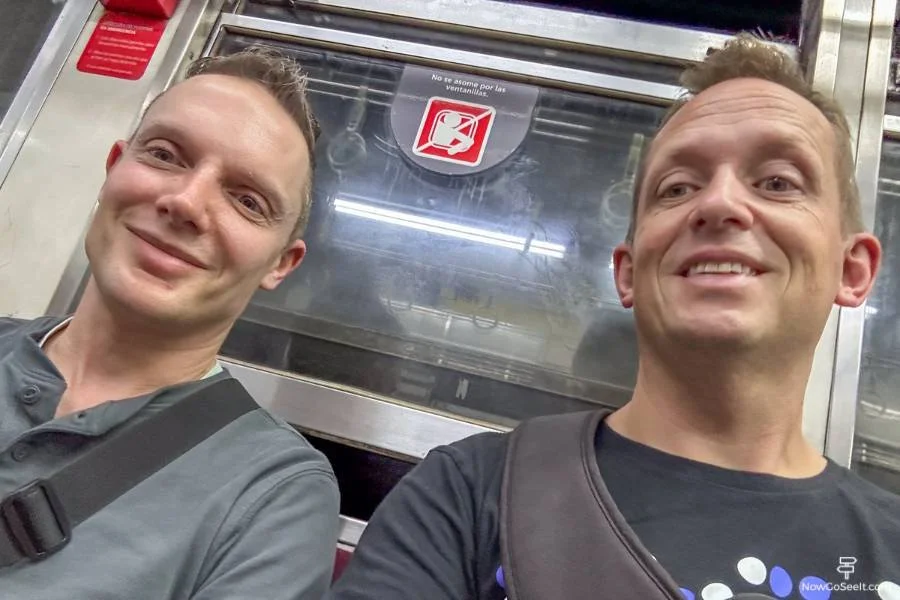
If you stay central, you’ll walk a lot and feel like you’re seeing the city instead of commuting through it. The local subway, called the Subte, is useful for simple hops. There are also plenty of buses that run on the same network, but they tend to be quite crowded. Buenos Aires just updated its Subte payment system, allowing you to simply tap your chipped credit card to pay for the fare. There’s no need for a Subte card or paper tickets.

Uber in Buenos Aires
Rideshares are often the easiest way to move between neighborhoods without thinking too hard. Uber fare is very affordable. When you’re bouncing between Recoleta, Palermo Soho, and Belgrano, rideshares keep the day moving. Keep your plan clustered by neighborhood so you’re not zig-zagging back and forth across town.
Buenos Aires Hop-on Hop-Off Bus Tours
If you’re on a tight schedule, or just don’t like to think too much about logistics when you travel, there are plenty of Hop-on Hop-Off bus tours that allow you to see it all with ease.
Buenos Aires Itinerary - Day 1
This Buenos Aires itinerary starts with the downtown heavy-hitters: Plaza San Martín, Florida Street, Plaza de Mayo, the Obelisco, and a Teatro Colón tour before ending the night in Puerto Madero. It’s a clean, high-impact first day that checks off the icons without wasting time zig-zagging across the city.
10:00 AM: Start at Plaza San Martín and plan to walk down Florida Street.
Plaza San Martín
Map: Google Maps
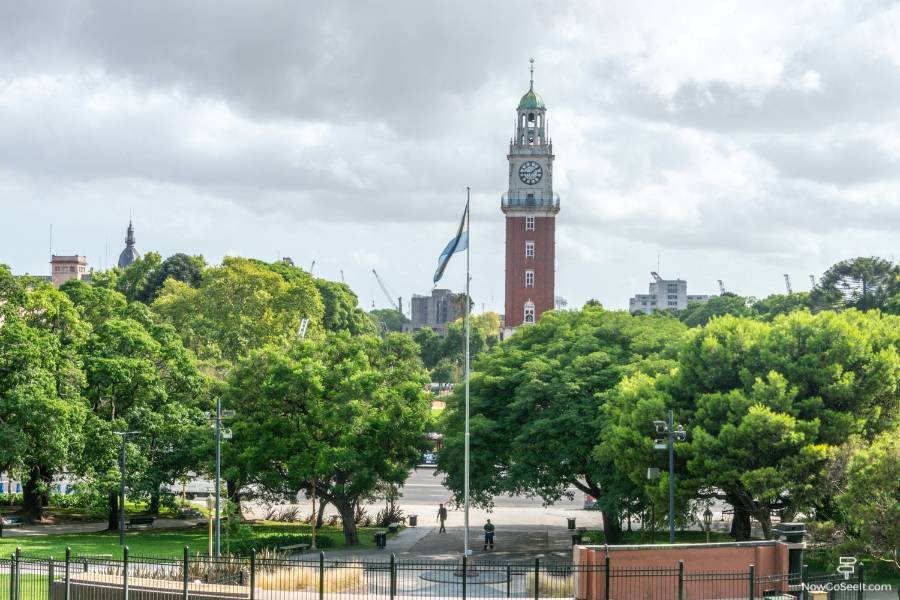
Your 3-day Buenos Aires itinerary starts at Plaza San Martín. This large green space is home to a few statues and monuments worth a walk by. It’s also a great place to people watch or to relax in the outdoors. The clock tower, Torre Monumental, was a gift from the British to celebrate independence. If you’re interested, you can pay to go to the top of the tower for a view. Take a moment on a park bench with a coffee if you need it. When you’re ready, look to the skyline to view our next attraction.

The Kavanagh Building
Map: Google Maps
The Kavanagh Building is an Art Deco masterwork from the 1930s. These days, it blends in with the surrounding skyline, but when it was built it was the tallest building in Latin America and the world’s tallest concrete reinforced building. We’re not going inside; unfortunately, there are no tours offered, and interior access is limited to residents. So treat it like a landmark, take a moment to appreciate its beauty and history, then exit the park to Florida Street.
Florida Street
Map: Google Maps
Florida Street is a key shopping artery of Buenos Aires. Here you’ll find shops, kiosks, and people moving with purpose. It’s touristy in parts, but it’s also convenient for locals, blending tourist shops with practical needs for people living in the city. This is one of those rare shopping streets that has somehow avoided being taken over by big-name international brands. Take some time to enjoy this rarity.

Galerías Pacífico
Map: Google Maps
Website: Link
If you are looking for big-name brands, Galerías Pacífico is a practical stop. It’s located right on Florida Street, a few blocks down from Plaza San Martín. If you’re not much of a shopper, it’s still worthwhile to stop into the mall to see the interior architecture. It’s a big shopping center, and it’s a convenient place to pick up basics or gifts without hunting all over the city. You’ll find a mix of local brands and international stores, and the layout makes it simple to do a loop and move on. This is also a good place to grab a drink or snack or to use a clean restroom.
12:00 PM: Keep lunch light so you don’t crash. You’ll eat very well later.

Florida Garden
Map: Google Maps
Florida Garden is a classic downtown café stop that makes sense when you’re already in the area and want something easy. This is the kind of place where you can do a simple coffee-and-pastry and get back out without turning lunch into a production. If you’re hungry-hungry, you can try Sandwiches de Miga, a multi-layered, crustless sandwich that you’ll see all over town. The menu is large and will please just about any culinary desire or hunger level without blowing the whole afternoon.
1:30 PM: Continue walking down Florida Street toward Plaza de Mayo.
Tip: If you’re staying near Florida Street, and you’ve loaded up on shopping, it might be worthwhile to return to your hotel to drop bags, then Uber back to Plaza de Mayo.

Plaza de Mayo
Map: Google Maps
Plaza de Mayo is a square that serves as the historic center of our Buenos Aires itinerary. Many of the “must-see” places are here. If you prefer guided context over reading plaques, walking tours are one of the easiest things to book ahead through GetYourGuide or Viator. You don’t need a long tour here, just enough to connect the dots.

Casa Rosada
Map: Google Maps
Website: Link
Casa Rosada is the headline sight of the square. The pink building is one of the most famous in all of Argentina. The president of Argentina does not live here, but the building serves as the country’s main building for work done by the president. The Casa Rosada Museum is attached. It celebrates the history of all Argentine presidents and preserves the ruins of a fortress that stood in the square prior to the building of Casa Rosada.

Metropolitan Cathedral
Map: Google Maps
Website: Link
The Metropolitan Cathedral is another anchor to the square. The cathedral was built in the early 19th century. The columned exterior is unique for a cathedral, and the interior spaces feature frescoed ceilings, a beautiful wooden altarpiece, and a well-preserved German pipe organ. The cathedral is also famous for being the home church for Pope Francis before moving to the Vatican in 2013.
The Cabildo
Map: Google Maps
Website: Link
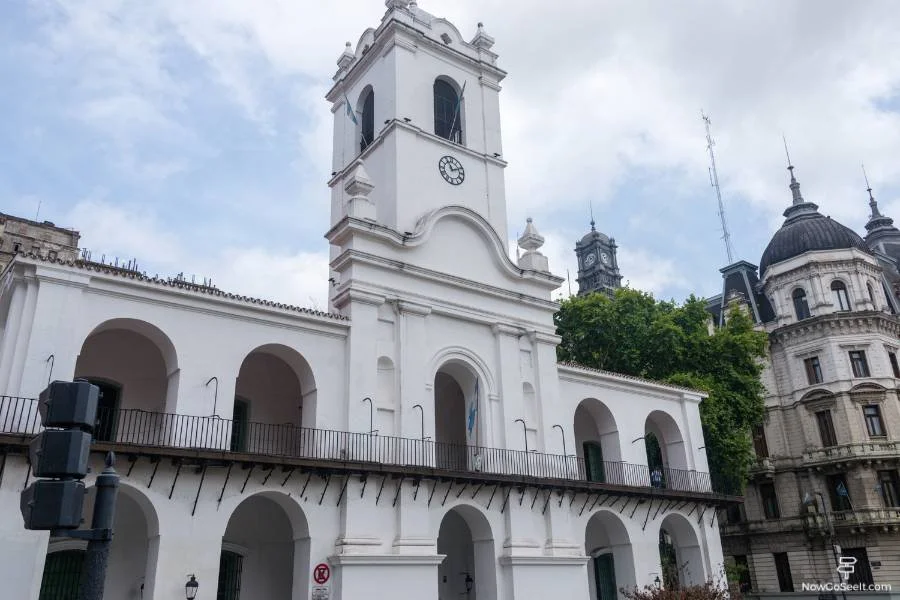
The Cabildo is worth a stop because admission is free and it’s right on Plaza de Mayo. It’s directly tied to the May Revolution of 1810, so you’re not just looking at displays—you’re standing in the setting of a major turning point. The museum covers what a cabildo was in the colonial period and why it mattered as a local institution running justice, administration, policing, and city organization. The building itself is part of the draw, with spaces like the sala capitular and an old jail area that help the visit feel concrete. One downside is the lack of English-language signage, so you’ll get more out of it with a translation app.
3:00 PM: Cut over to Avenida 9 de Julio and see the Obelisco.

Obelisco and Avenida 9 de Julio
Map: Google Maps
Website: Link
The Obelisco is one of those landmarks that looks familiar before you even arrive because you’ve seen it in a thousand photos and videos. Avenida 9 de Julio is massive, and standing there makes the scale feel real. This is not a “spend two hours” stop; it’s a “see it, appreciate it, snap some photos and move on” stop. The surrounding streets are busy, loud, and very city, which is part of the experience. If you’re into theater and old-school city architecture, the area around Corrientes is a fun add-on without needing a formal plan. It’s also a good spot to recalibrate your route because transit and rideshares are easy from here. If you hit this at a peak time, it can feel chaotic, but that’s normal downtown energy. Treat it like a checkpoint and keep the day flowing. It is possible to visit the top of the Obelisco for a 360-degree view of the surrounding area.
4:00 PM: Walk to Teatro Colón for a guided tour. Book it ahead.

Teatro Colón
Map: Google Maps
Website: Link
Teatro Colón is one of the best “big wow” interiors you can see on a first trip to BA. The building itself is impressive before you even step inside, but the tour is where it pays off. The main auditorium is the star, with that classic horseshoe shape and the kind of detailing you don’t see in modern venues. The tour pace is usually tight, which is good when you’re trying to fit a lot into a short trip. It’s also one of those places where you keep looking up because every ceiling and chandelier is trying to outdo the last one. If you’re even mildly interested in opera houses, this is worth the time and the ticket price. It’s important to pre-book your tour time, especially if you’re seeking the English language tour, as the English tours are limited.
7:30 PM: Take a short walk or rideshare to Puerto Madero, see Puente de la Mujer, then commit to a steak dinner.

Puerto Madero and Puente de la Mujer
Map: Google Maps
Puerto Madero feels like a different side of Buenos Aires, mostly because it’s newer and more polished than the older core. The waterfront docks and pedestrian paths make it easy to cover ground without dealing with traffic. The signature bridge, Puente de la Mujer, is a quick photo stop, and it looks especially good once the lights start coming on. If you want a couple extra stops beyond the bridge, you can pop into Buque Museo Corbeta ARA Uruguay for a fast “museum on a ship” moment, then head over to the Amalia Lacroze de Fortabat Art Collection if you want a small, focused art stop in the same area. We also did happy hour at Negroni Bistro, which is an easy place to take a break before dinner. This is a great evening area because it’s built for being out at night, with restaurants lined up and people everywhere. The vibe is less “historic” and more “modern city by the water,” and it’s one of the simplest neighborhoods to visit without a complicated plan.
8:30 PM: Steak time. Go classic and don’t overthink it.
El Mirasol de Puerto Madero
Map: Google Maps
Website: Link
El Mirasol is the kind of parrilla choice that fits a first trip because it delivers exactly what you came for. This is where you go when you want a real steak dinner, not a tiny plate with creative drizzles. If you’re splitting, an ojo de bife or bife de chorizo plus fries is a very safe call. Empanadas are an easy add-on if you want to taste a few things without ordering half the menu. Service in Buenos Aires can move at its own pace, and that’s fine because dinner is not meant to be rushed here. The point is to settle in and let the first day end on a high note. Reservations are a necessity here.
Walk it off back toward the hotel, or rideshare if your feet are done negotiating.
Buenos Aires Itinerary - Day 2
Day 2 of 3 days in Buenos Aires focuses on Recoleta and Palermo, mixing free museums, standout interiors, and a few easy reset stops so you don’t burn out. Finish the night with a Tango show if you need to check that box while you’re here.
10:00 AM: Rideshare to Recoleta Cemetery.

Cementerio de la Recoleta
Map: Google Maps
Website: Link
Tour: Viator, GetYourGuide
Recoleta Cemetery is one of the most memorable stops in Buenos Aires because it’s not subtle about being dramatic. The mausoleums are packed tightly, and the whole place feels like a maze of marble and statues. Even if you’re not a cemetery person, it’s hard not to respect the artistry here. Eva Perón’s tomb is the big-name stop, and you’ll likely see visitors leaving flowers and pausing for a minute. It’s interesting to notice how wildly different the tomb styles are, from grand family vaults to more modern sculptures. It’s easy to do a tight route, see the major names, and move on before it turns into museum fatigue. If you want context without reading signs and navigating the confusing, this is another easy, short tour category on Viator or GetYourGuide. The adjacent Basílica Nuestra Señora del Pilar is worth a quick stop.
11:30 AM: Walk to the Museo Nacional de Bellas Artes.
Museo Nacional de Bellas Artes
Map: Google Maps
Website: Link
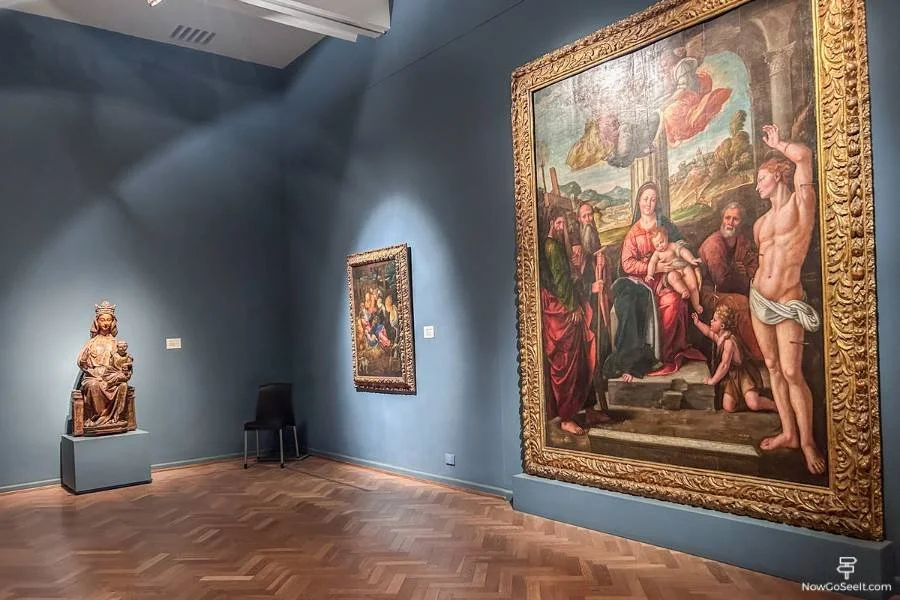
This museum is a smart stop because it’s free and the collection is legit. You can walk in, pick a few galleries, and get a strong art fix without sacrificing your whole day. The European masters are the headline for many visitors, and it’s genuinely cool to see big-name works without a steep admission fee. If you’re short on patience for museums, this is a place where a 30-minute plan works. The building is easy to navigate, and you can move fast without getting lost. There’s also a solid mix of Argentine art, which helps the visit feel connected to where you are instead of just being another museum anywhere. If you’re traveling with someone who loves art more than you do, this is a good compromise stop.
12:30 PM: Walk over to Floralis Genérica for a quick stop.

Floralis Genérica
Map: Google Maps
Website: Link
Floralis is one of those quick landmarks that’s worth seeing because it’s weird in the best way: a giant metal flower sitting out in the open. It’s modern, dramatic, and one of a kind. The modern sculpture uses photoelectrics to control built-in hydraulics. As the sun moves across the sky, the flower opens, bends toward the sunlight, then closes. Visiting Floralis at different times of the day allows you to witness the metallic floral phases. Unfortunately, we don’t have all day to watch the spectacle.
1:00 PM: Walk over to the Decorative Arts Museum.

Museo Nacional de Arte Decorativo
Map: Google Maps
Website: Link
Museo Nacional de Arte Decorativo is an easy add to your Buenos Aires itinerary because admission is free and the building itself is the main attraction. It’s set inside a French-style mansion, and the interiors are the kind of over-the-top elegant that make you keep stopping to look at ceilings, staircases, and room details. Even if you’re not a hardcore museum person, this one works because it feels more like getting access to an impressive private home than committing to hours of exhibits. The collection leans toward decorative arts and period rooms, so you’re seeing how spaces were designed to look and function, not just items in glass cases. What makes it extra interesting is the mix of old-world design with contemporary pieces and exhibitions, so it doesn’t feel frozen in time. If you care about architecture, interiors, or just want a high-impact free museum, this is a strong pick.
2:00 PM: Uber/rideshare to the Japanese Garden, grab lunch at the cafe.

Jardín Japonés
Map: Google Maps
Website: Link
The Japanese Garden is a paid-entry garden spot in Palermo that’s worth it if you want an outdoor, well-kept place to reset after a busy morning inside museums. The main draw is the layout: ponds, bridges, and carefully designed landscaping that makes the whole place feel very intentional. The koi ponds are a highlight. There are plenty of photo angles that look great without you having to work for them, especially around the bridges and water. The on-site café/restaurant is convenient when you want an easy snack or tea without leaving the area. Most people can do a satisfying visit in about an hour or two.
3:00 PM: Uber/rideshare to Palermo Soho, spend the afternoon and early evening bouncing between streets and shops.

Palermo Soho
Map: Google Maps
Palermo Soho is where you go when you want the “shopping neighborhood” version of Buenos Aires. The streets around Armenia, Honduras, and Gurruchaga are packed with boutiques, home goods, and design-forward shops. It’s a good place to hunt for something you’ll actually use, not just a souvenir you’ll regret later. If you like men’s fashion, you’ll have plenty to browse without needing a mall. It’s also a good area for coffee breaks because there’s always another café nearby when you decide your feet want a pause. The neighborhood is visually interesting too, with murals and storefronts that lean creative without trying too hard. During our visit, a street fair with loads of stalls selling local goods was happening at Plaza Serrano.
6:45 PM: Dinner reservation time. Go classic parrilla and split a big steak if you’re with someone.
Santos Manjares
Map: Google Maps
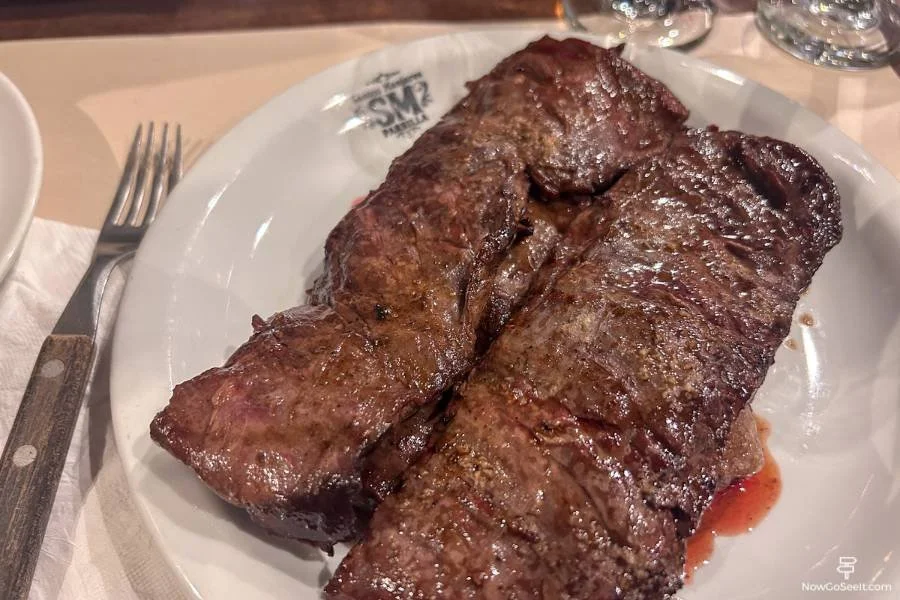
Santos Manjares is the kind of Buenos Aires spot that feels like a real neighborhood parrilla without turning dinner into a whole production. The menu hits the classics, the portions are generous, and you don’t need to be a steak expert to order well here. We went with the skirt steak, and it was exactly what you want from that cut: flavorful, properly charred, and not pretending to be fancy. It’s a great pick if you want something beefy that still feels a little lighter than a massive ribeye situation. The sides are straightforward, so think fries, salad, or grilled vegetables, and you’ll be happy. Service is usually moving at an Argentine dinner pace, meaning you’re not getting rushed out, especially if the place is busy. This was my favorite dinner in Buenos Aires, and honestly, it lands in my top five travel dinners of all time. If you’re trying to pick one steak dinner in BA that feels worth the hype without chasing a white-tablecloth scene, this is the one I’d put at the top of the list.
9:30 PM: Optional Tango Show.
El Querandí Tango Show
Map: Google Maps
Website: Link
El Querandí is an easy tango show choice because it’s built for visitors without feeling like a stadium production. The setting leans classic, and the show is exactly what you think a tango night should look like: sharp styling, live music, and dancers who make it look effortless. It’s a good option when you want the experience, but you don’t want to spend your whole trip researching which show is “the” one. Many nights include a dinner option, but you can also just do the show if you already ate in Palermo. If you want to avoid any last-minute scramble, this is the kind of thing that’s easy to pre-book through GetYourGuide or Viator. You’ll walk out feeling like you did the classic Buenos Aires thing at least once.

Check out our other posts about things to see and do in Buenos Aires or Argentina!
Or visit our Destinations page to be inspired.
Buenos Aires Itinerary - Day 3
Day three of our Buenos Aires itinerary starts in San Telmo for the market and street fair, then shifts to classic interiors at Café Tortoni and a guided Palacio Barolo tour before a daytime visit to La Boca and Caminito. It’s the best contrast day of the trip, and it’s also the one where smart timing matters most.
10:00 AM: Head to San Telmo early. Start inside the market, then work your way outside to the Sunday fair area.

Mercado de San Telmo
Map: Google Maps
Website: Link
Mercado de San Telmo is one of the most satisfying morning stops in Buenos Aires because it mixes food, antiques, and people-watching in one compact space. You can do a quick lap and immediately find something interesting, whether it’s a stall selling snacks or a corner packed with old stuff that makes you stop and look closer. It’s busy, especially on Sundays, and that’s part of the experience. The food options range from quick bites to sit-down stops, so you can keep it flexible depending on how hungry you are. The antiques side is fun even if you’re not buying, because it’s a crash course in what ends up in markets here. This is also one of those places where you’ll see a lot of repeat patterns: mate gear, tango souvenirs, and random objects that somehow have a price tag. Despite being there for breakfast, we stopped for some amazing lunch-style sandwiches at La Choripanería.
11:30 AM: Walk out toward Defensa Street and Plaza Dorrego for the Sunday fair zone.

Feria de San Telmo and Plaza Dorrego
Map: Google Maps
The San Telmo Sunday fair zone is the kind of thing that makes you feel like you hit the timing jackpot if you’re in town on the right day. If you’re not visiting on a Sunday, the antique shops lining the streets in this area are still worth a visit. The stalls stretch along the streets with everything from art to crafts to items that are half souvenir, half conversation starter. Plaza Dorrego is the anchor, and it’s a good place to pause and take in what’s happening before you keep moving. This area is lively and packed, but it still feels like a real city scene, not a staged event. You can bargain a little, but don’t turn it into a sport; the goal is to find something you genuinely want.
1:00 PM: Uber/rideshare to Cafe Tortoni for lunch.
Café Tortoni
Map: Google Maps
Website: Link
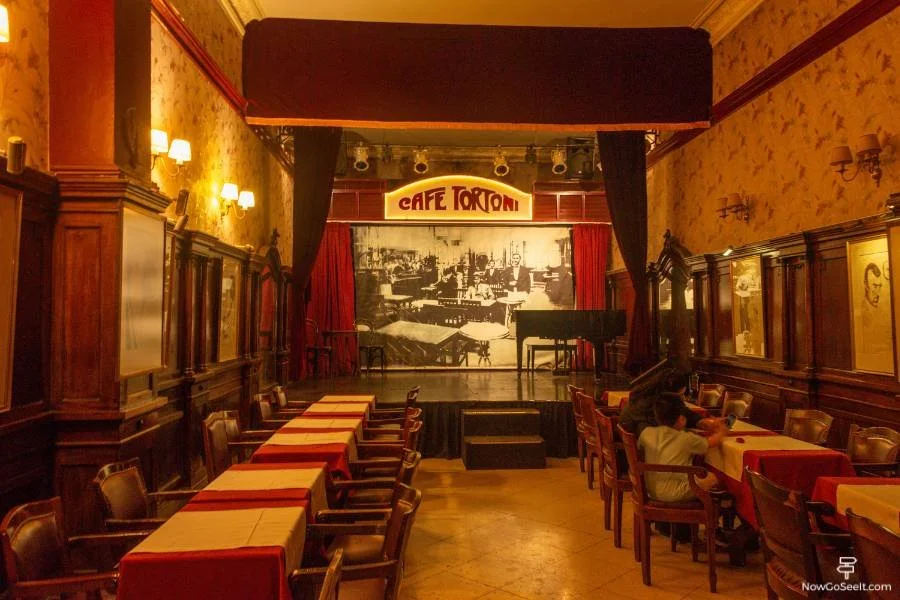
Café Tortoni is the most famous old-school café in Buenos Aires, and it feels like stepping into a different era the second you walk inside. The big draw is the interior: dark wood, mirrors, and that classic café layout that makes you want to look at everything before you even sit down. Expect a line at peak times, because everyone has the same idea, so going earlier in the day can save you a lot of waiting. Coffee is the obvious order, but this is also a good place for hot chocolate and something sweet if you want a quick break that feels distinctly Buenos Aires. It’s not the cheapest café stop in town, and it can feel touristy, but the setting is the point. If you’re trying to check off one classic, iconic BA café experience, this is the one that makes the most sense. After lunch, ask your waiter if you can see the private rooms in the back of the restaurant; they’re worth checking out.
2:00 PM: Walk to Palacio Barolo for a guided tour.

Palacio Barolo
Map: Google Maps
Palacio Barolo is one of the most interesting building tours in Buenos Aires because it’s not just a pretty interior; it’s a whole concept. The building is themed around Dante’s Divine Comedy, which sounds nerdy until you’re actually inside and it starts clicking. The tour is usually around 90 minutes, and it moves through different sections so you’re not just standing in one room listening to facts. The views from the top are the payoff, especially when access to the lighthouse is available. The building itself has personality, with details that feel very old-school Buenos Aires. It’s a great contrast to your earlier day of markets and bookstores.
4:00 PM: Uber/Rideshare to La Boca, focus on the area around Caminito St.

La Boca
Map: Google Maps
La Boca is the loud, colorful neighborhood everyone pictures when they think of Buenos Aires, and it’s worth seeing if you want that classic photo-heavy stop. Caminito is the main event, with painted buildings, street performers, souvenir stands, and plenty of people filming the same angles for good reason. It can feel a bit like an outdoor stage set, but it’s still fun, especially if you lean into it. If you’re into sports culture, this is also where you’ll find Boca Juniors’ stadium, La Bombonera, which is a bucket-list stop for a lot of travelers. The neighborhood has a gritty edge once you move away from the main tourist zone, so this is a daytime visit. If you want it to be easy, book a guided La Boca stop or a city tour that includes it through Viator or GetYourGuide and let someone else handle the logistics.

We’re on YouTube!
The same great content without all the pesky reading!
If You Have More Time in Buenos Aires
If you want to stretch this into a Buenos Aires itinerary 5 days plan, add MALBA, a Tigre day, and a full stadium visit (not just a quick stop) so the extra time feels intentional. With two more days, you can also slow down in Palermo and Recoleta, revisit your favorite parrilla, or take the ferry to Uruguay for a UNESCO site.
If you have an extra half day, the biggest “why isn’t this already in the schedule” add-on is El Ateneo Grand Splendid. It’s a fast stop, it’s easy to reach, and it feels like a theater that happens to sell books. If you want another museum that doesn’t feel like a long commitment, MALBA is the most obvious modern-art pick and it pairs well with the Recoleta/Palermo side of town. If you’re into fútbol culture, make time for a proper La Bombonera visit (or a stadium experience at Estadio Monumental) instead of just snapping a photo outside. Tigre is the easiest near-city escape when you want a different setting without turning it into a complicated travel day. And if you want a more structured “see it all” day, a Hop-on Hop-off bus can be a practical way to stitch the neighborhoods together without doing rideshare math all day.
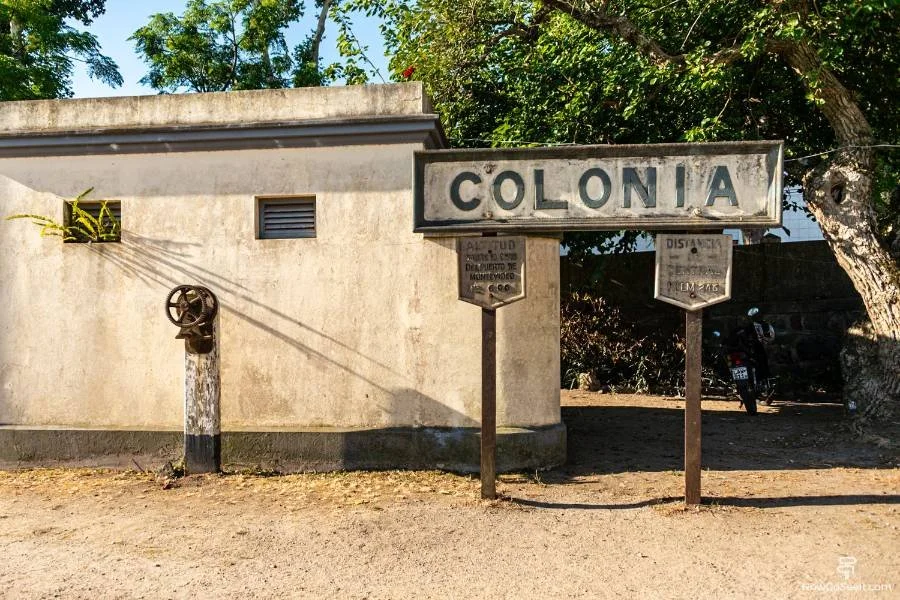
Taking the Colonia Express ferry for a day trip across the river to the UNESCO-listed Colonia del Sacramento in Uruguay is also a solid way to spend a day.


Best Things To Do in Buenos Aires:
Plaza San Martín
Torre Monumental
The Kavanagh Building
Florida Street
Galerías Pacífico
Florida Garden
Plaza de Mayo
Casa Rosada
Casa Rosada Museum
Metropolitan Cathedral
The Cabildo
Avenida 9 de Julio
Obelisco
Calle Corrientes
Teatro Colón
Puerto Madero
Puente de la Mujer
Buque Museo Corbeta ARA Uruguay
Amalia Lacroze de Fortabat Art Collection
Negroni Bistro
El Mirasol de Puerto Madero
Cementerio de la Recoleta
Basílica Nuestra Señora del Pilar
Museo Nacional de Bellas Artes
Floralis Genérica
Museo Nacional de Arte Decorativo
Jardín Japonés
Palermo Soho
Plaza Serrano
Santos Manjares
El Querandí Tango Show
Mercado de San Telmo
La Choripanería
Feria de San Telmo
Plaza Dorrego
Café Tortoni
Avenida de Mayo
Palacio Barolo
La Boca
Caminito Street
La Bombonera