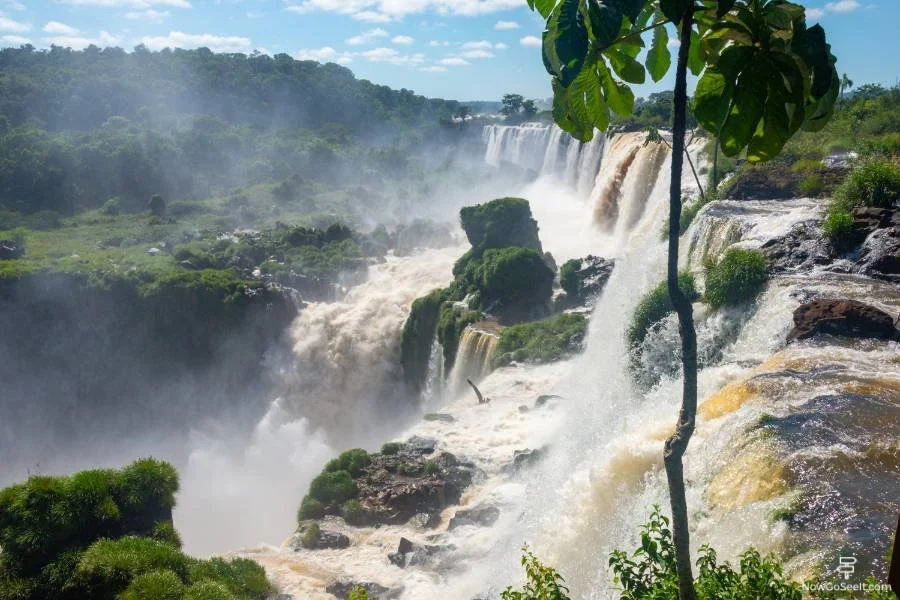
Iguazu Falls - Argentina Side: Everything You Need To Know
Now Go See It is reader-supported. When you buy through links on our site, we may earn an affiliate commission.
Plan your visit to Iguazu Falls on the Argentina side with ticket tips, train strategy, best trails, boat ride advice, wildlife notes, and food stops.
YouTube Video Guide To Iguazu Falls
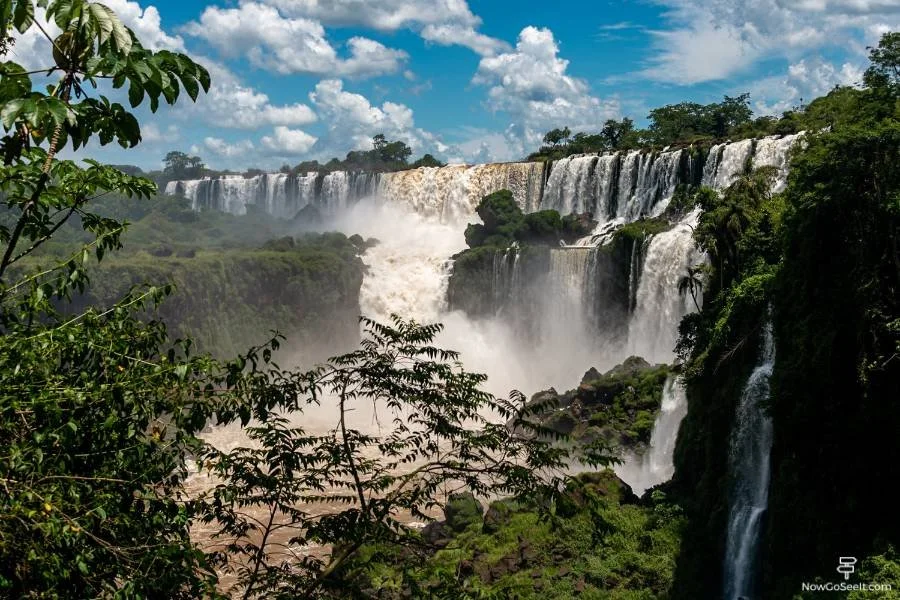
The Argentina side of Iguazú Falls is the side that feels like a full-day event, not a quick scenic stop. You are not just walking to one viewpoint, taking a photo, and calling it done. This side gives you the long catwalks, the train ride through the jungle, the top-down views, the lower close-up views, and the big finish at Devil’s Throat. It also takes more planning than the Brazil side. That is not a complaint. It is the reason a lot of people end up liking this side more. You cover more ground, you see the falls from more angles, and you get much closer to the force of the water. The tradeoff is that timing matters.

How To Buy Iguazú Falls Tickets
Tickets for the Argentina side can be bought online through the official Iguazú Argentina site or at the park ticket booths. The official park FAQ recommends buying online to avoid waiting in line. Tickets are generally released 30 days before your visit date. At the moment, the official site lists international visitor admission at AR$45,000, and that includes use of the park train (Tren Ecológico de la Selva). The park also says the second day is 50% off when you present your first-day ticket at the ticket office. This is assuming your second day falls within the 72 hour validity of the ticket. That is a genuinely useful discount because this is one of those parks where a second day would not be wasted.
Prices can change, so I would still check the official site before you go rather than trusting any blog post, including this one, on the number.
The park is open every day of the year, including rainy days, with normal hours of 8:00 AM to 6:00 PM and last entry at 4:00 PM. In some peak periods and long holiday stretches, they extend opening to 7:00 AM.

Airline Miles and Hotel Points 101
We share tips and tricks for credit card points and miles. These tools help us save money on our trips around the world by allowing us to accumulate airline and hotel points.

How To Get To Iguazu National Park
From Puerto Iguazú, you can reach the park by car, taxi/rideshare, or by the Río Uruguay bus from the main bus terminal, with service about every 20 minutes.
The park entrance is on Route 101, kilometer 142. It’s a relatively short distance from the city of Puerto Iguazu. That makes it easy enough to do on your own, even without a rental car. A taxi is easy.
The public bus is cheap and straightforward. Driving is fine too, and there is paid parking on site. The official site currently lists daily parking for cars at AR$6,000.
If you’re day-tripping from the Brazil side of the falls, plan for a border crossing, which could add a significant amount of time to the journey.
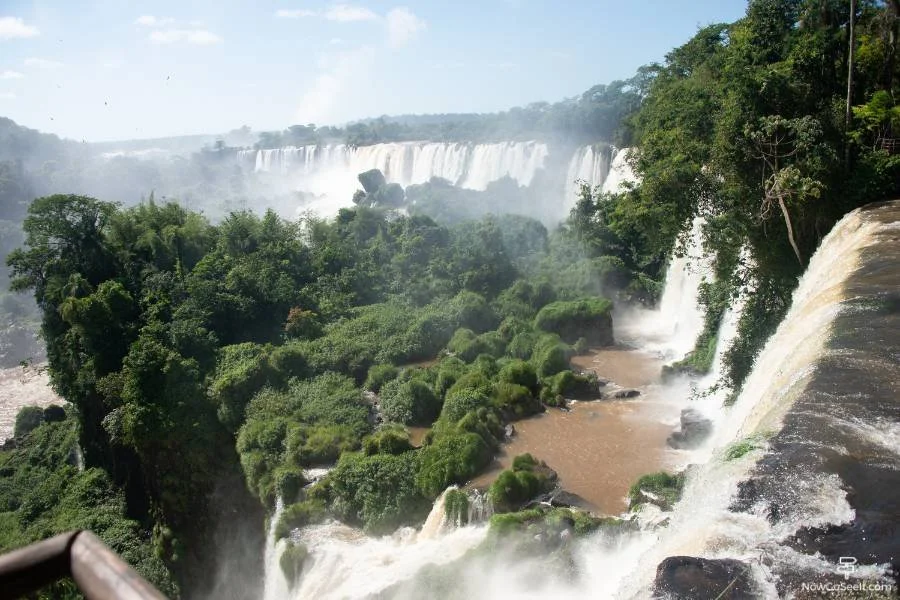
What To See in Iguazú Falls
My advice is to get into Iguazú National Park early and go directly to Garganta del Diablo. The official train starts running at 8:30 AM and runs roughly every 30 to 40 minutes. That spacing matters more than it sounds like it should. Miss one train and you can suddenly burn a big chunk of your day standing around. For that reason alone, early entry is worth it.
The route I would do is Devil’s Throat first, then Upper Circuit, then Lower Circuit, with food somewhere between Upper and Lower, depending on your energy level. Devil’s Throat is the headline act and one of the easiest places for crowds to stack up. Upper Circuit is easier on the body and gives you those broad above-the-falls views. Lower Circuit is more physical, more immersive, and a better late-morning or afternoon section once you are already in park mode.
For travelers adding the boat ride, build everything else around that reserved time because that excursion has its own rhythm and can throw off your day if you treat it like a casual add-on. I would try to book your boat ride around lunch time, after you’ve done Garganta del Diablo and the upper circuit.

Garganta del Diablo (Devil’s Throat)
Map: Google Maps
The first time you reach Garganta del Diablo, it feels a little unreal. The walk out is long, flat, and almost deceptive because the river looks so calm for so much of it. Then the noise starts getting louder and louder until the whole thing opens up in front of you. This circuit trail is about 1.4 miles (2,200 meters), and it is one of the main accessible routes in the park. This is not the prettiest walk in the park in a classic jungle sense, but it is the most dramatic payoff. You are standing right at the edge of the most powerful section of the falls. Mist goes everywhere. The sound is ridiculous. Photos never fully catch how huge it feels in person. This is the trail I would hit first in the day because if anything gets delayed later, at least you’ve already done the big one. Plus, crowds tend to build up here in the afternoon.
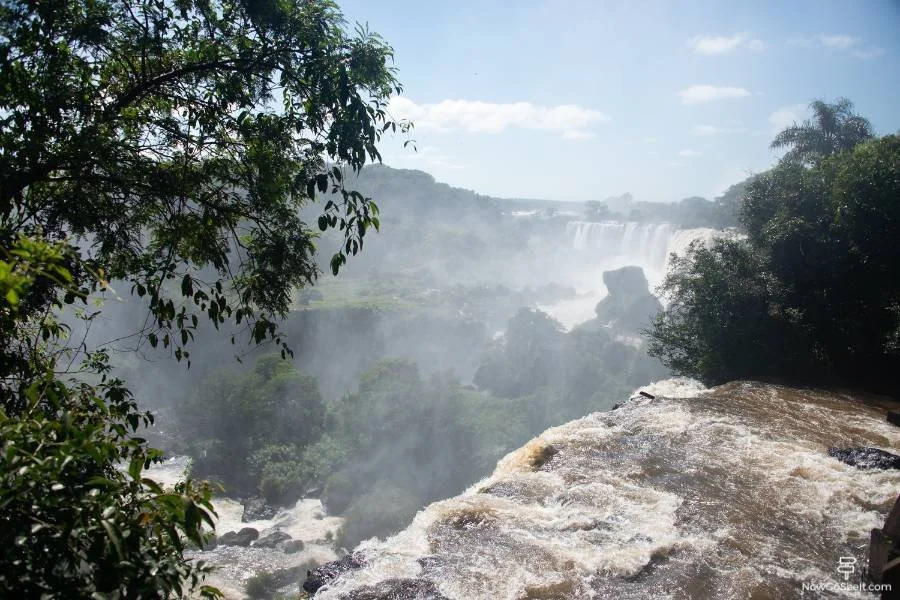
Upper Circuit
Map: Google Maps
The Circuito Superior is the part of the park that makes you understand the scale of the whole waterfall system. The trail is about 1.1 miles (1,850 meters), and it is fully accessible. You are walking above the falls here, not down beside them, so the views are wider and more panoramic. This is where you get those long, layered scenes of water dropping off the edge in multiple directions. It is less about getting blasted with spray and more about understanding how big this place is. I liked that it feels efficient. The path does not beat you up, and the payoff comes quickly. For travelers who want strong views without a ton of physical effort, this is the friendliest major circuit in the park.
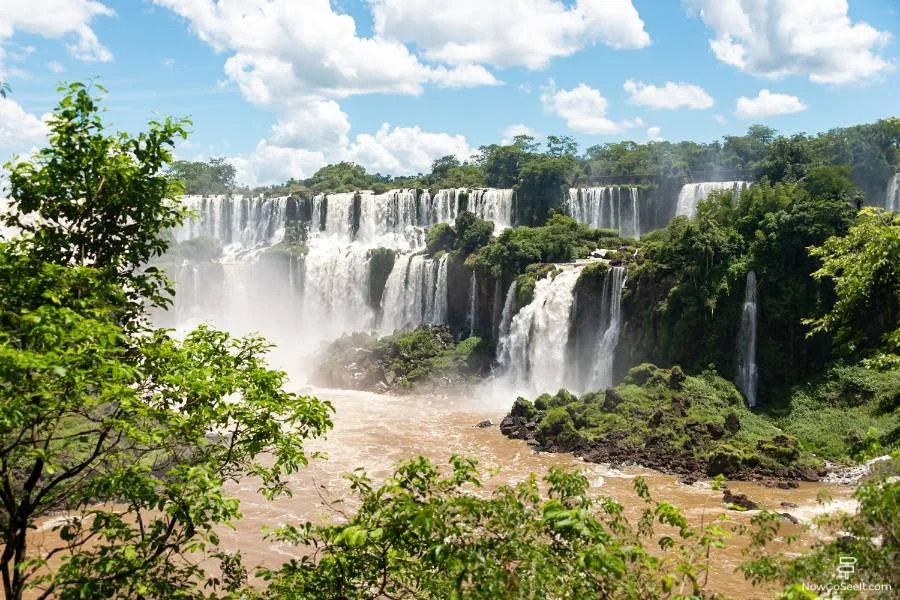
Lower Circuit
Map: Google Maps
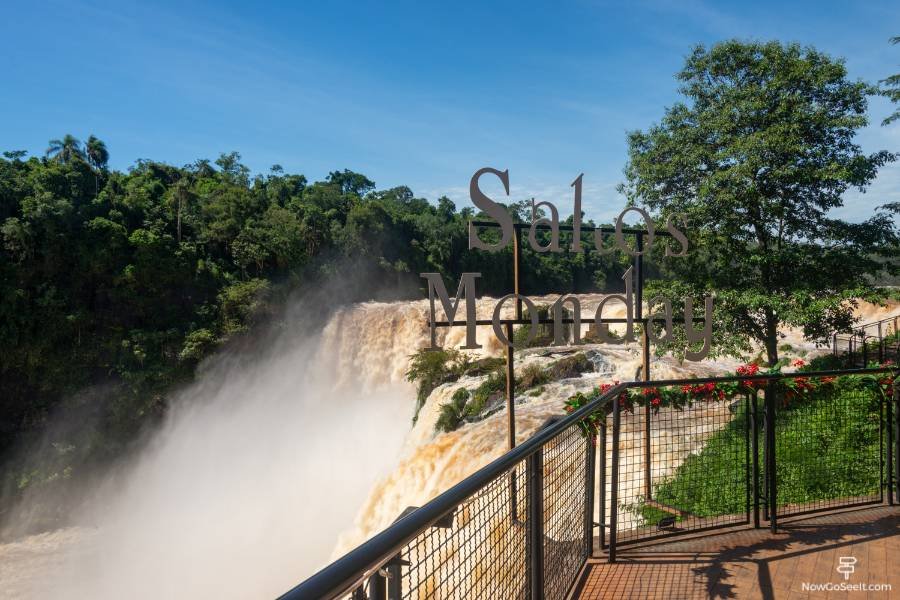
The Circuito Inferior is where the park gets more physical and more fun. This trail is just under one mile (1,450 meters). Despite being the shortest trail, it is the most strenuous. It includes sections with stairs. The reward is that you feel much closer to the falls here than you do on the Upper Circuit. It is louder, wetter, and more dramatic. You stop looking at the waterfalls like scenery and start feeling them as a force. This was the section that made the Argentina side feel bigger and more varied than I expected. It is the less-popular trail in the park. It’s a perfect afternoon break from the crowds.

Iguazú Falls Food In The Park
Food inside the park is there to keep you moving, not to become the culinary highlight of your Argentina trip. There are food outlets in the Patio de Servicios and at the train stations, along with potable water points, restrooms, medical assistance, and souvenir shops.
You’ll find things like burgers, choripanes, fries, wraps, sandwiches, and empanadas. That gives you a pretty good idea of the food lane here. It is casual, fast, and made for people who are in the middle of a park day. Grab something filling, drink water, and keep it moving.

Wildlife At Iguazu Falls
You will probably see coatíes. More accurately, you will almost definitely notice them because they know exactly where humans with snacks tend to gather. The park and tourism authorities both warn visitors not to feed wildlife, and there is a good reason for that. Abandoned food and trash can make coatis and monkeys sick, change their behavior, and even make them more aggressive around people.
Beyond coatis, the park is a good place to spot monkeys, toucans, agoutis, butterflies, and lots of birds. The protected area boasts 450 bird species.
So yes, go in expecting wildlife, but realize that the heavy crowds tend to scare off most wild animals. If you’re looking for wildlife encounters, try visiting some of the park’s less popular trails and scenic areas.

We’re on YouTube!
The same great content without all the pesky reading!

Is The Iguazú Falls Boat Ride Worth It?
The boat ride is famous for getting people soaked under the falls. Iguazú Jungle is the official concessionaire for the boat excursions inside the park. The boat ride currently costs AR$90,000 for a roughly two-hour experience that starts with an open truck ride through the Yacaratiá trail and ends with a speedboat run into the falls area. This is not a gentle scenic float. For travelers who want the most chaotic, loud, wet experience of the day, this is the add-on. For travelers who mainly want viewpoints, photos, and an easier park day, it is skippable.
Posted restrictions say pregnant women and children under 12 are not allowed, and they also flag motor, visceral, sensory, and cognitive limitations as reasons someone may not be permitted to board. They also note that river conditions can affect navigation. So my honest take is this: it looks like a blast, but it is not a throwaway add-on for everyone. Assume you will get drenched. And do not book it thinking it is just a cute little boat cruise.

Check out our other posts about things to see and do in Iguazu Falls or Argentina!
Or visit our Destinations page to be inspired.

Why A Local Guide to Iguazú Falls Is Worth It
This is one of those places where hiring a local guide can pay for itself in stress reduction alone. My guide was booked through Viator, and in my opinion, it was money well spent. The Argentina side is not impossible to do on your own, but it is very easy to do inefficiently on your own. A good guide knows how to time the first train, when to hit Devil’s Throat, how to sequence Upper and Lower, where crowds build first, and how to keep the whole day from turning into lines and backtracking.
The park’s own FAQ notes that professional guides are available, and that checks out with what I saw on the ground. Mine helped us move through the day with way less friction than we would have had by ourselves. He helped us beat crowds, cut down on dumb waiting, and made the park feel less overwhelming. For a destination this big, that extra help is worth serious consideration.
Most tours include round-trip transportation from your hotel to the falls with a return in the afternoon. Most tours do not include park admission and expect participants to buy their tickets in advance online prior to arriving at the park. Most full-day tours can be booked for less than US$40. In my opinion, it’s worth every penny.
Many tours offer the chance to visit both sides of the falls in one day (Argentina and Brazil). In my opinion, that’s too much for one day. Once you include the time crossing the border, you’re losing a lot of time in the park. If you have the time, do one side per day.

What To Bring to Iguazú Falls
The official park advice is pretty simple and pretty correct: comfortable clothes, comfortable shoes, water, and a hat. They also recommend insect repellent, and I would add sunscreen without hesitation. A lightweight rain layer is smart too. It can protect you from the waterfall mist, or if the weather shifts.
This is also the kind of day where a portable charger, a dry pouch, and a cheap poncho from Amazon earn their place in your bag. Not glamorous, very useful.