Bruges and Ghent in One Day From Brussels: Ghent Itinerary
Now Go See It is reader-supported. When you buy through links on our site, we may earn an affiliate commission.
Day Trip to Ghent from Brussels: (Jump To)
Train From Brussels To Ghent and Bruges
If you're doing Bruges and Ghent in one day, the train to Ghent from Brussels takes about 30 minutes and runs multiple times per hour. You can then hop a direct train from Ghent to Bruges, making a Bruges and Ghent day tour from Brussels easy to pull off without a tour group.
The day before our journey we secured our train tickets for the day. We found it was easy to route our train travel by chatting with the nice employees at the train ticket counter. We explained our ideal itinerary to the agent, and he sold us the appropriate tickets and shared the train timetables for our day. The nice thing about the train tickets in Belgium is that they are valid for a journey, not a time. You buy a ticket to take you from point A to point B, but the time is flexible. The flexible time made it so easy to explore at our own pace, without the stress of worrying about missing the train.
If you’re taking multiple train trips throughout Belgium (and northern Europe) you might inquire about multi-day train passes. We made the mistake of buying single tickets for each trip, after we got back home and did some calculations, we could have saved over USD$200 if we bought the combo ticket. Oops.
We decided to journey from Brussels to Ghent, then to Bruges, then back to Brussels. The 40-minute train ride to Ghent had us at the Gent-Sint-Pieters station at about 11:30 am. At the Lijnwinkel stand in the train station (located inside the station on the opposite end from the Starbucks) buy yourself a day pass for local public transportation in Ghent and Bruges (€6/ea). This pass will allow you to ride all the trams and busses in both cities.
Explore Ghent on Foot
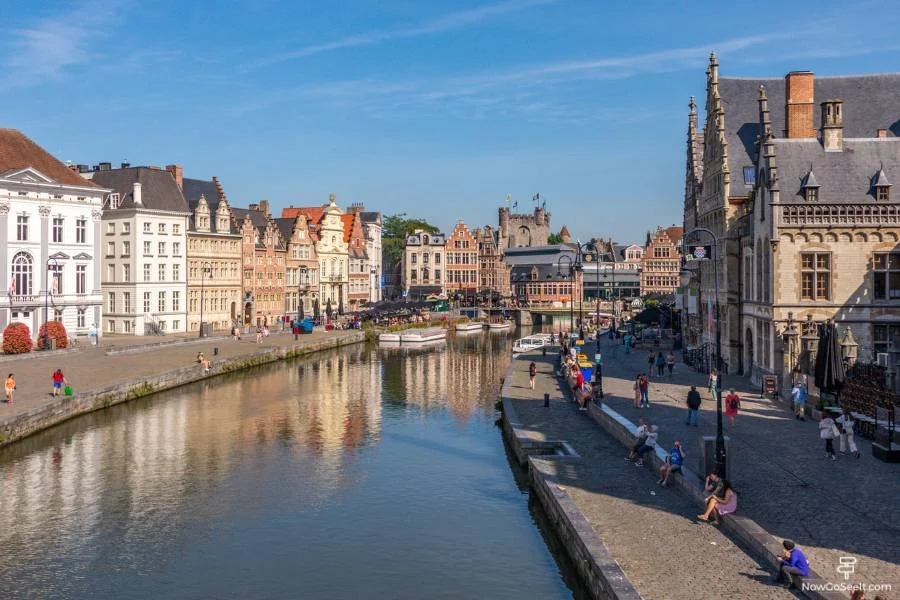
Ghent is best explored on foot, especially the historic core near Saint Bavo’s Cathedral and Graslei. A Ghent one day itinerary usually includes canal views, quirky street art, and architecture you won’t find on a standard Bruges and Ghent Belgium tour.
We boarded the next tram (Tram #1) to Korenmarkt, the central square of Ghent. From here it’s pretty easy to explore on foot. A great photo spot is the square-adjacent St. Michael’s Bridge. From there you can get a look down the canals and at the famous towers of Ghent.
Korenmarkt
Map: Google Maps
This is the main square in central Ghent and the easiest place to start your day. It’s a major tram stop and also where most walking tours begin. The square is lined with grand old buildings that used to be guild halls for grain traders—hence the name, which translates to “Wheat Market.” These days, it’s mostly restaurants, cafes, and bars with lots of patio seating. The architecture here is impressive even if you don’t care about the historical context. Every building has its own shape and roofline, so the photos always come out looking extra dramatic. This is also where you’ll find Saint Nicholas’ Church and your best access to the St. Michael’s Bridge. It’s busy, especially midday, but not in a stressful way. It’s a good place to grab a snack or coffee before hitting the main sights.
St. Michael’s Bridge
Map: Google Maps
This is the best photo spot in Ghent. From here you can see three of the city’s most famous towers all in a row: Saint Nicholas' Church, the Belfry, and Saint Bavo’s Cathedral. Turn around and you’ve got an open view of the canal below. It’s one of those rare spots where everything around you is equally impressive. The bridge is pedestrian-friendly and elevated just enough to get a good angle from every direction. There are a few steps to climb if you’re approaching from the Korenmarkt side, but it’s worth the effort. We visited early in the morning before the day-trippers arrived and were able to get some great photos without too many people around. This is also where you’ll first catch a good view of Saint Nicholas’ Church, our next stop.
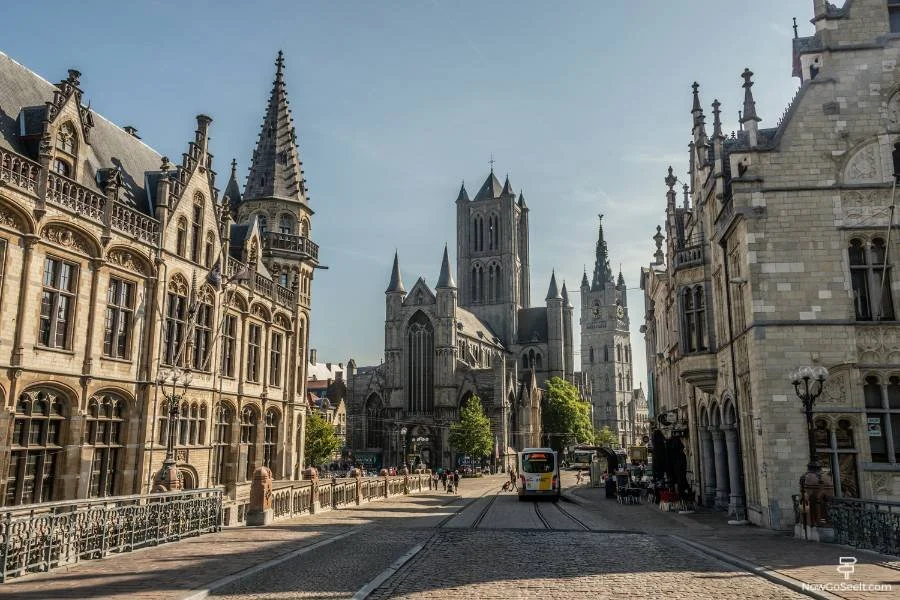
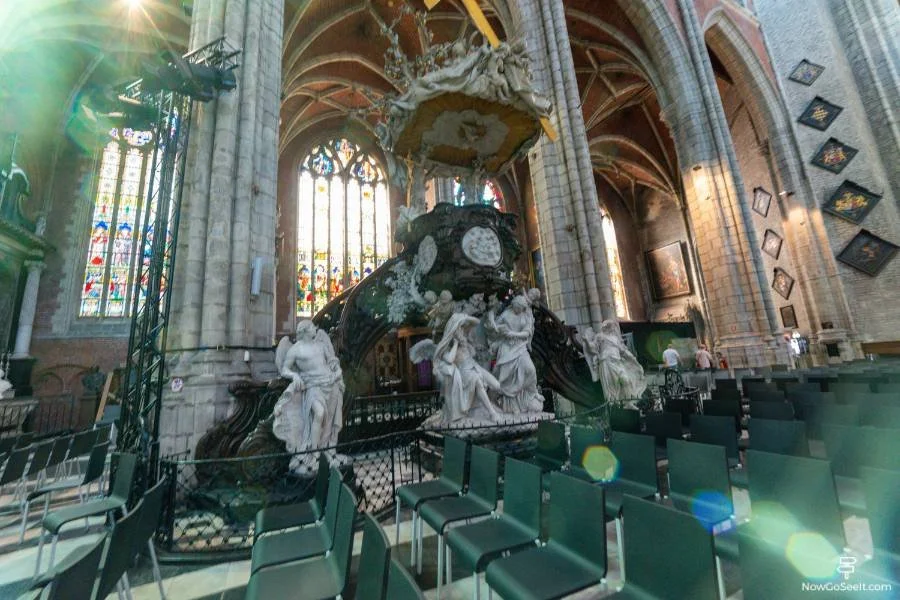
When you turn around you’ll get a good look at our next stop, Saint Nicholas' Church. The 13th century church is ginormous. You can step inside for free to check out the famous organ, the impressive stained glass, and the historic altarpiece.
Saint Nicholas’ Church
Map: Google Maps
Website: Link
This enormous stone church has been around since the 13th century. The scale of the place is even more impressive once you’re inside. Entry is free, which makes it an easy addition to your itinerary. The organ is the main attraction here—visitors make a beeline for it when it’s visible. It was installed in the 19th century and still gets used during special events. The interior walls are lined with stained glass windows that cast colorful patterns on the floor. There’s also a carved wooden pulpit and a modern glass altar that contrasts with the rest of the historic space. Unlike other churches that feel more like museums, this one is still an active worship space, so there’s usually someone inside lighting a candle or sitting in a pew. You won’t need much more than 15-20 minutes here.
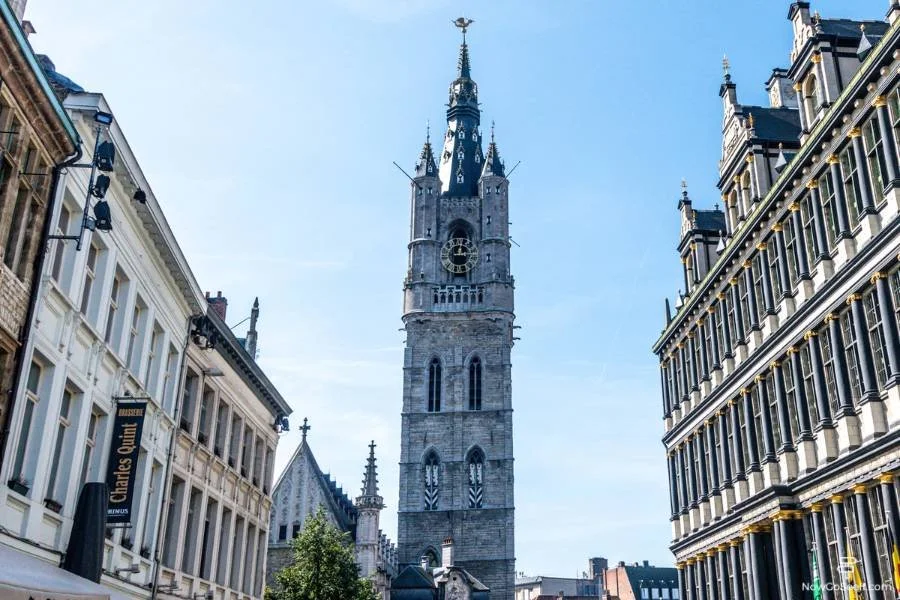
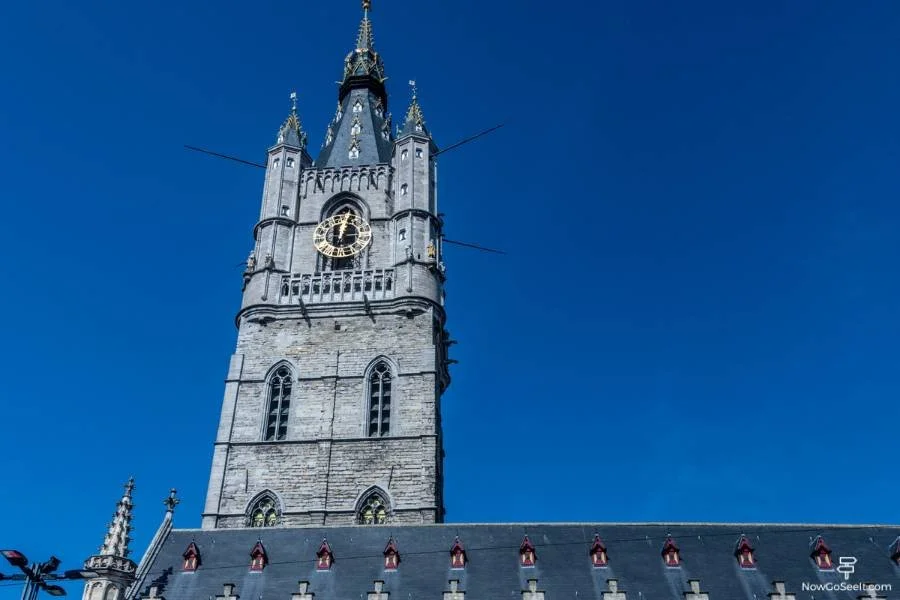
Next door is the Belfry of Ghent. Built in 1313 the bell tower’s original use was to keep 14th century Belgians on time with the hourly ringing of the bells. It also served as a watchtower and warning service. The Belfry is one of 56 buildings encompassed in the Belfries of Belgium and France UNESCO World Heritage Site.
Belfry of Ghent
Map: Google Maps
A UNESCO-listed bell tower built in the early 1300s, the Belfry of Ghent was originally used to keep time and to warn the city of incoming threats. It’s 300 feet tall and still houses a functioning carillon, so depending on when you visit, you might hear the bells playing. You can climb to the top via a combination of stairs and an elevator, and the panoramic view from the top is one of the best in town. On the way up, there are exhibits about the city’s watchmen, the significance of the tower, and the construction of the bells. The dragon weathervane at the top has become a city symbol and has been replaced multiple times over the centuries. It's an easy visit from Saint Nicholas' Church since they're practically neighbors.

Hotel Point and Airline Miles 101
We share credit card points and miles tips and tricks. These tools help us save money on our trips around the world by allowing us to accumulate airline and hotel points. Learn More
Continuing our journey, with a shortcut through Ghent’s graffiti street, we made our way to another historic square, Vrijdagmarkt. This translates to Friday Market. In the historic square, for generations, there has been a market every Friday morning. The square is surrounded by historic buildings, shops, and in the center a statue of Jacob van Artevelde, the “Brewer of Ghent.”
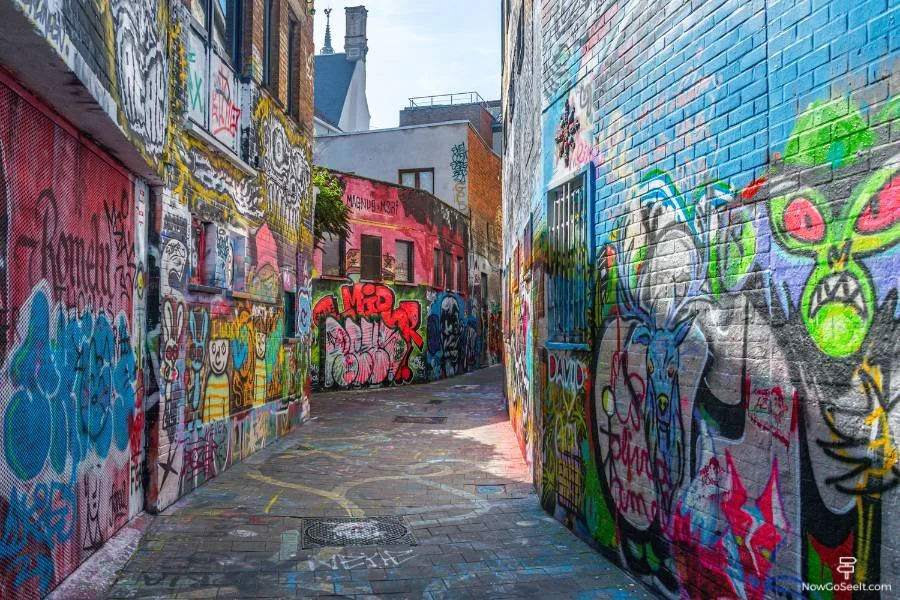
Graffiti Street (Werregarenstraat)
Map: Google Maps
Just a few blocks from the main tourist sights is Werregarenstraat, a narrow alley that’s been designated as a legal graffiti space. It’s constantly changing. Artists from all over the world (and a lot of teenagers from Belgium) come here to make their mark. The graffiti ranges from political statements and cartoons to just tagging for tagging’s sake. There are no real rules, so don’t be surprised if something amazing you saw in the morning is gone by the afternoon. It’s a quick stop, but fun for photos. There’s not much else in the alley besides the paint, so this is more of a pass-through spot than a destination. Still, it’s a cool contrast to the heavy history just a few blocks away.
Vrijdagmarkt (Friday Market Square)
Map: Google Maps
Vrijdagmarkt translates to Friday Market, and there’s been a market here every Friday for hundreds of years. The square itself is ringed by guildhalls and a few well-preserved Art Nouveau facades. In the middle of the square stands a statue of Jacob van Artevelde, a 14th-century merchant who brokered trade deals with England during wartime and helped make Ghent wealthy. He’s kind of a local legend, and the statue makes it look like he’s pointing across the square with authority. You’ll still find vendors here on Fridays selling everything from produce and meat to clothing and tools. If you’re visiting on another day, the square is still worth a stop—there are bars and restaurants with outdoor seating, and the people-watching is excellent.
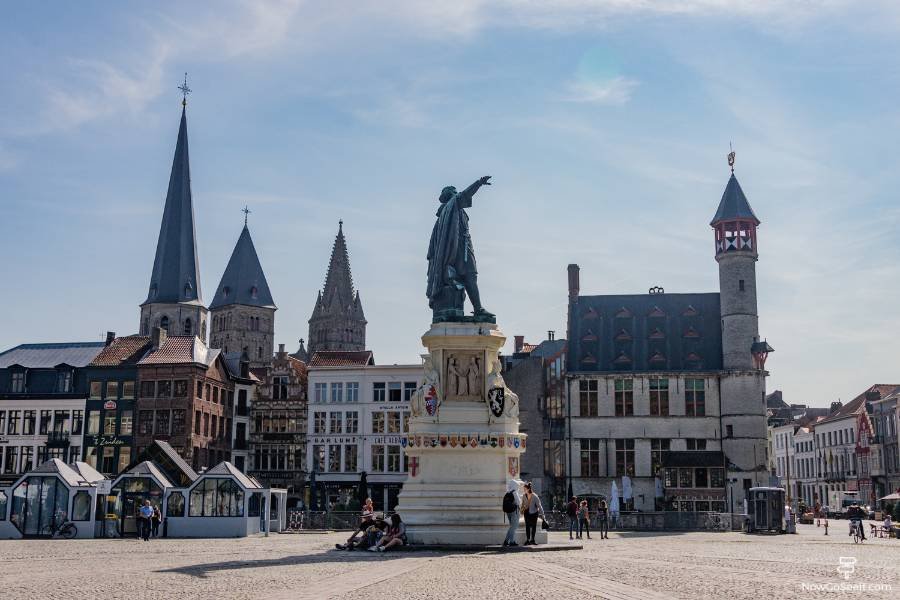
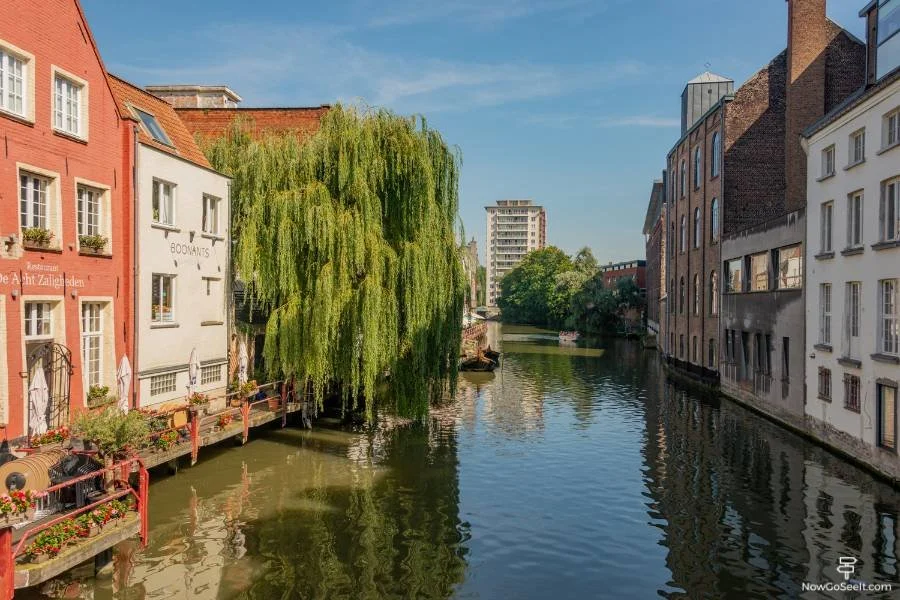
Near the square, the historic streets are smaller and more quaint. Canals and bridges intersect the centuries-old roads. The beauty of this area is what makes Ghent so special.
Visit Gravensteen Castle
Gravensteen Castle is right in the middle of Ghent and doesn’t take long to tour, which makes it perfect for a quick stop on your Bruges and Ghent in one day plan. You can walk there from the train station or main squares, and it’s a highlight of any Ghent one day itinerary.
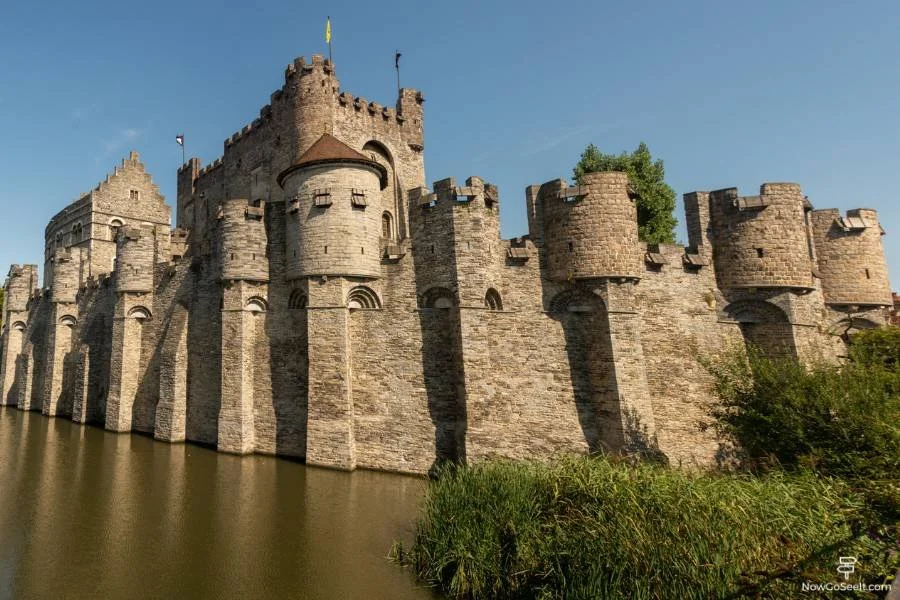
Our final stop in Ghent is probably the most popular sight in all of Ghent, Gravensteen castle. The castle was built in 1180. What’s cool about Gravensteen is that it has all the things we learned as kids that a castle should have—a moat, a dungeon, pointed towers, and a tall brick wall.
Tickets for the castle are massively reasonable at €10/each with includes an audioguide. Typically audioguides are informative but dry. In a genius move, this audioguide is told by a Flemish comedian, Wouter Deprez. It’s engaging, informative, and funny. Five stars all around.
Gravensteen Castle
Map: Google Maps
Website: Link
Gravensteen is the ultimate childhood idea of what a castle should be. There’s a moat. There are battlements. There’s even a torture exhibit. Built in 1180, the castle has served as a noble residence, a courthouse, and a prison. Today, it’s a self-guided museum where you can walk the walls and explore the rooms inside. The audio guide is a little irreverent, and it adds some humor to what could otherwise be a pretty dark history lesson. The views from the upper levels give you a good look at the city from a different angle. One of the more surprising parts of the visit is just how many of the rooms are open for visitors. This isn’t a “peek into one room and leave” kind of attraction. Give yourself at least an hour to really enjoy it.
We spent about 90 minutes exploring the castle before taking the tram back to the train station to continue on to the second destination in our day trip, Bruges.
Continue to Part 2: Bruges
This day is part of our Three Day Brussels Itinerary.
Things To See in Ghent:
Korenmarkt
St. Michael’s Bridge
Saint Nicholas' Church
Belfry of Ghent
Graffiti Street
Vrijdagmarkt (Friday Market)
Gravensteen Castle