One Day Angkor Wat Itinerary: Angkor Wat Pass Info and Tips
Now Go See It is reader-supported. When you buy through links on our site, we may earn an affiliate commission.
Embark on an enchanting journey through ancient splendor as you explore the majestic Angkor Wat temples with our one day itinerary.
One Day Angkor Wat Itinerary: (Jump To)
Stop One: Main Temple Complex
Stop Two: Tonle Om Gate
Stop Three: Bayon Temple
Stop Four: 3 temple Walking Loop + Terrace Of The Elephants
Stop Five: Ta Prohm
Stop Six & Seven: Banteay Kdei and Ta Keo
We had just one day to see the entire Angkor Wat archeological site near Siem Reap in Cambodia. We flew in late the night before and checked into our hotel, The Butterfly Pea, a LGBTQ+ friendly hotel located right on the Siem Reap River. Our hotel was simply wonderful. The service was attentive and friendly and the building had the right amount of local charm. I wish we had been able to stay longer than two nights.
While planning our day I was surprised to learn how much more Angkor holds than the main temple complex of Angkor Wat. An important distinction is that Angkor is the city and Angkor Wat is the famous building within the city.

How To Get Around Angkor Wat
Distances are bigger than they look; plan your one day in Angkor Wat with a loop that links Angkor Wat and Angkor Thom by tuk-tuk or an Angkor Wat guided tour so you’re not wasting time between temples. If you prefer AC, hire a private driver for the day—it's an easy, affordable upgrade over Angkor Wat by tuk-tuk when the heat spikes.
Visit our partners Viator or Get Your Guide for some solid tour recommendations.
My original plan was to take a taxi to the temple and explore it on foot. I quickly realized that was impractical and possibly even impossible. To just cross Angkor Wat from moat to moat is over one mile. From there it would take another hour to walk to the next temple we wanted to see. Combine the distance with the heat and less-than-optimal walking conditions and you could be in for a long and disappointing day on foot.
Happy to have made this discovery I looked into some popular options. Some bloggers found that renting bicycles is a great way to see the site and enjoy the outdoors. Others relied on local drivers, mostly in tuk-tuks, waiting outside to drive travelers to their next stop. We decided that it would be most convenient to hire a driver for the day.
Should I Hire a Driver in Angkor Wat?
If your goal is to cover Angkor Wat in one day without melting, a private driver is the most efficient option and often costs less than you’d expect for door-to-door temple transfers. Travelers who want commentary should book an Angkor Wat guided tour, while DIY visitors can pair a driver with a downloadable Angkor Wat map of temples.
I know how this sounds. “Hire a driver for the day,” is right out of an episode of The Real Housewives. However, for a mere USD$57 (+tip) we were able to get a car, fuel, and driver for 8 hours. We booked through Klook, an online tour agency. We used Klook numerous times during our trip to Cambodia and Thailand and were pleased with every experience.
The driver picked us up at our hotel, we gave him our planned itinerary for the day, and off we went. When we reached a stop, he asked us how long we planned to stay, then told us where he would meet us. Every time it went off without a hitch. It was also really nice to sit in an air-conditioned car for a few minutes between stops.
Angkor Wat Sunrise
Angkor Wat at sunrise is the headline moment—arrive early to claim a spot by the reflecting pools and decide later if you’ll also try Angkor Wat at sunset. If you prefer a sure thing, look for Angkor Wat sunrise tours that handle timing, transport, and the best photo angles.
Witnessing the sunrise at Angkor Wat is a one-in-a-lifetime experience. Witnessing the glow of the sun on the temples is the perfect way to connect with the ancient history you will be surrounded by during your day here.
To embark on this adventure, it is best to arrange for early transportation to Angkor Wat the night before. Including buying your tickets in advance. (See below). Plan to arrive well before sunrise to secure a prime viewing spot near the reflecting pools as this is a very popular activity.
The easiest and most stress free way to guarantee you can see the sunrise over the temples is to book a prearranged excursion.
Where To Get Tickets To Angkor Wat
Buy your Angkor Wat pass at the official ticket office on the way from Siem Reap; prices vary by duration, but the Angkor Wat admission ticket and Angkor Wat day pass are the standard for short visits. Lines move fast, cards are accepted, and purchasing on-site is still the rule—there’s no official online Angkor Wat entry ticket.
Angkor Wat Ticket Office: Google Maps
Before entering the complex, you need a ticket. They are available only in person from a government-run ticketing center halfway between Siem Reap and the temples. The tickets were USD$74 each. They accepted our Visa credit card. Our driver waited outside while we bought our tickets. There is currently no way to buy tickets online.
Angkor Wat 1 Day Itinerary
Use an efficient Angkor Wat itinerary that starts at the main temple at opening, then continues through Angkor Thom for Bayon’s faces and the Terrace of the Elephants before wrapping at Ta Prohm. This route hits Angkor Wat and Angkor Thom in a logical order and maximizes shade, photo light, and your limited time.
Stop One: Main Temple Complex
Enter across the floating bridge for first views of the five towers, then climb when queues are short for the best look at the Angkor Wat interior. This is the world’s largest religious monument, so budget time for galleries, bas-reliefs, and those steep stairs.
From the ticketing counter, we went straight to the main temple complex. The area is surrounded by a huge moat. You cross the moat via a modern floating bridge a few meters away from the original ancient stone passage.

From there you pass through the complex walls and take your first gaze at the five high temple towers. Original construction started on the temple in the 12th century, over 900 years ago. The temple is the largest religious monument in the world.

Upon entering the inner temple you’re allowed to queue up to take the (very) steep steps to the top of the highest tower. Slim passages run from tower to tower. From here you can take a breathtaking view of the vast ancient city that surrounds you.
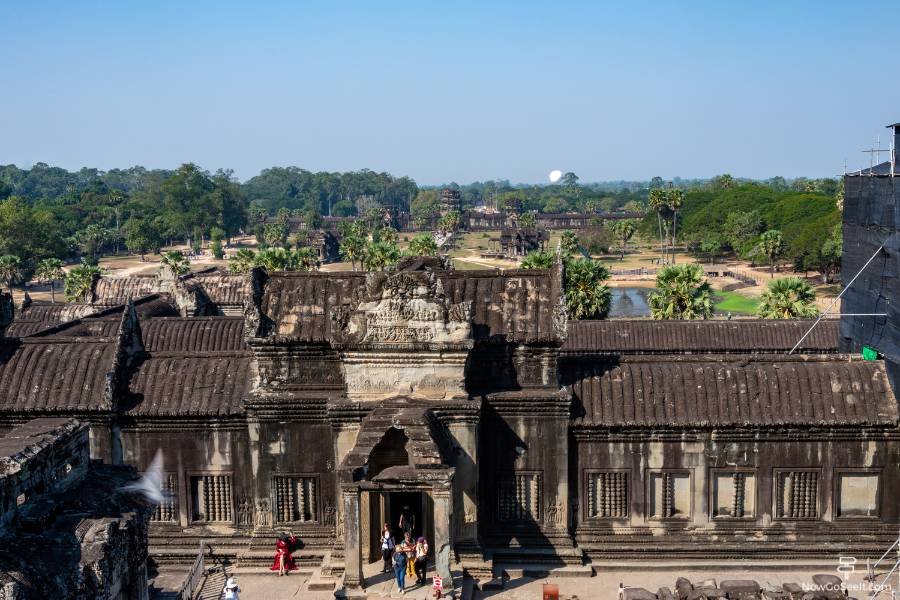
Climbing down we spent another hour exploring the many buildings surrounding the main temple before meeting up with our driver who was to take us to the Bayon Temple.
Stop Two: Tonle Om Gate
Pause at the causeway of stone guardians and roll through Tonle Om Gate to see classic Angkor Thom architecture up close. It’s a quick stop that delivers big visuals and sets up the next leg toward Bayon.
On the way to the temple, we took a stop at a bridge crossing over an ancient canal. The bridge was lined with huge stone carvings and ended with the Tonle Om Gate, a stone-arched entrance with a face that we had to drive through to get to the next temple.

Stop Three: Bayon Temple
Bayon’s smiling faces are the signature of Angkor Thom and a perfect contrast to Angkor Wat’s symmetry. Climb to the upper terraces for close-ups, then scan the bas-reliefs for everyday scenes from the Angkorian empire.
The Bayon Temple is believed to have been built a few hundred years after Angkor Wat. It is a much smaller temple that is famed for the large stone smiling faces that adore the temple towers. There are also extensive bas-relief stone murals that give, without context, a history of the Angkorian empire. Another steep staircase leads you to the top for the best views of the ancient faces.
Stop Four: 3 Temple Walking Loop + Terrace Of The Elephants
Link Baphuon, Phimeanakas, and Preah Palilay on a compact walk, then finish at the Terrace of the Elephants and the Terrace of the Leper King for sweeping carvings. This mini-loop keeps you inside Angkor Thom and stacks variety without long transfers.
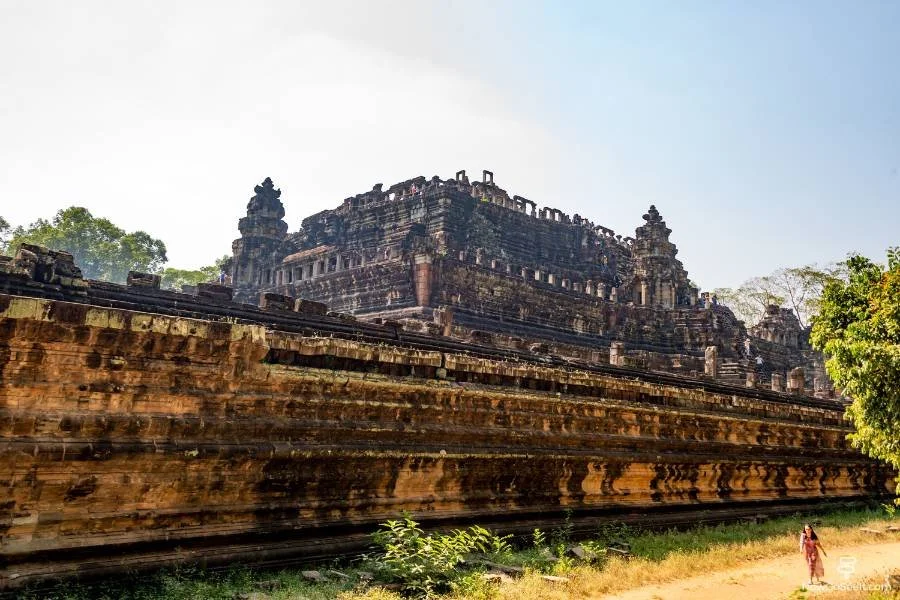
After leaving the temple we took an hour-long loop walk past three other temples, the first being Baphuon a three-tiered pyramid-shaped temple with a long stone bridge leading to the entrance. A 51-year restoration project ended in 2011.
We continued our shaded walk through an ancient stone wall to see Phimeanakas a temple similar in design to the last one we saw. This was one of the few temples that did not allow entrance.

The third temple, Preah Palilay, was just around the bend. It is a largely destroyed ruin being reclaimed by trees and vegetation.
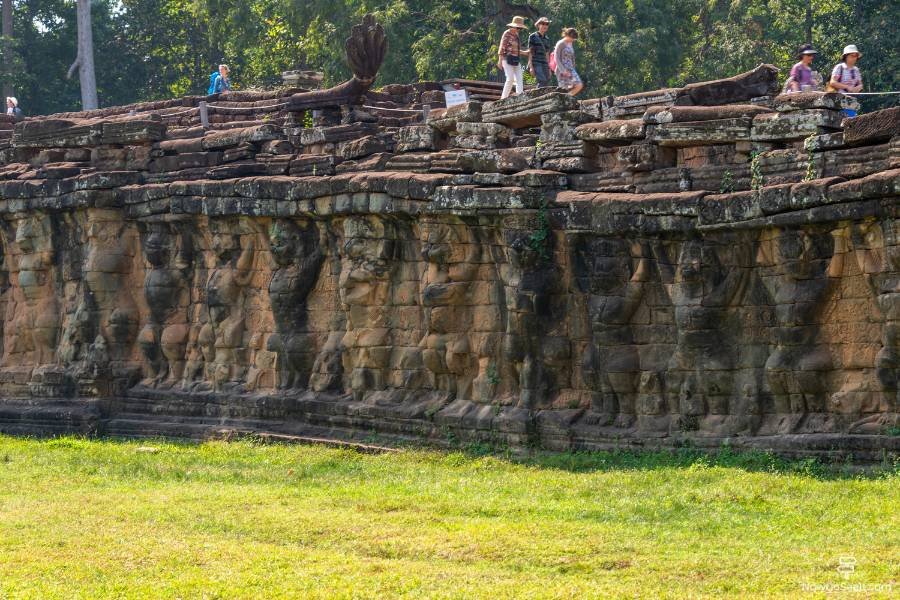
From here we met back up with the road and then headed back into the sunshine to pass the Terrace Of The Leper King and the Terrace Of The Elephants. This area is thought to have been a site to gather armies and for public ceremonies. The high walls are decorated with bas-relief elephant carvings.
Stop Five: Ta Prohm
Ta Prohm blends temple stone and strangler fig roots, which is why it’s often paired as Angkor Wat Ta Prohm on many tours. Paths are uneven and photo stops pile up, so give yourself a focused 30–45 minutes here.
Returning to the car our driver took us to Ta Prohm. This temple became popular after being used as a filming location for the film Tomb Raider. The temple is relatively small in scale compared to others in the area. Its most distinguishing features are the trees that have grown into the walls taking over the temple. It gives you the feeling that you’ve just discovered an ancient temple in the middle of a jungle that has been forgotten for generations.

Stop Six & Seven: Banteay Kdei and Ta Keo
Cap your route with Banteay Kdei’s calmer courtyards and Ta Keo’s steep pyramid for one last climb if you have the legs. These two are efficient add-ons when you’re close on time but still want more temples without backtracking.
As we were beginning to run out of time with our booked driver for our 8 hours together, we made two more quick stops at Banteay Kdei and Ta Keo before ending our day back at the hotel.
There is an unbelievable amount of things to see in and around Angkor. I would love to return for an extended visit to take the time to see every one of the ancient temples in the area. I feel fortunate to have been able to see as much as we did during our short one-day visit.
Tips for Visiting Angkor Wat
Check Angkor Wat opening times, respect the Angkor Wat dress code (shoulders and knees covered), and carry cash for small purchases even though USD is widely accepted. Download an Angkor Wat map of temples, decide on a guided tour vs. driver, and lock in your Angkor Wat itinerary before sunrise so you can spend the day exploring—not planning.
Should I Hire a Tour Guide in Angkor Wat?
Without a tour guide, it is very easy to miss some of the coolest things hiding in these temples. There are not any description signs and very few directional signs to guide you. Learn as much as you can before you leave and make a list of things to see at each temple. Alternatively, numerous local guides are offering their services at reasonable prices at the entrance to Angkor Wat.
Money in Cambodia
Despite having its own official currency, Cambodia uses USD for almost everything. Even the ATMs dispense American dollars. I recommend bringing some cash from home. We got hit with a $9 ATM foreign transaction fee plus a $5 ATM fee to get out the $3 we needed to pay for dinner.
Do I Need a Travel Visa For Cambodia?
Unlike Thailand, Cambodia requires US citizens to prearrange a travel visa before traveling. It’s a quick and easy online process. It is possible to get a Visa on Arrival, but failing to do it in advance will slow down your entry at airport customs. It’s best to check the rules of entry for your country early in the planning process.