Panama Canal Passage: Cruise Through the Panama Canal
Now Go See It is reader-supported. When you buy through links on our site, we may earn an affiliate commission.
There is no better way to see one of mankind’s most impressive feats of engineering than from the deck of a cruise ship.
Panama Canal Partial Transit vs. Full Transit: Explained
The Panama Canal offers two types of transits for cruise ships: partial transit and full transit. A full Panama Canal transit means your ship sails from ocean to ocean, while a partial transit usually turns around mid-way—often after the first lock. If you're booking a Panama Canal cruise from San Diego or looking at 10 day cruises to Panama Canal, make sure you know which one you’re getting.
Panama Canal Partial Transit:
A partial transit typically involves cruising through part of the Panama Canal, usually the Miraflores and Pedro Miguel Locks. This option provides passengers with a taste of the Panama Canal experience without traversing the entire canal. The partial transit route takes less time but still shows off the impressive engineering of the canal's locks. These cruises typically leave and return to the same port. Usually including other Caribbean destinations on the itinerary.
Panama Canal Full Transit:
A full transit involves traversing the entire length of the Panama Canal, from the Atlantic Ocean to the Pacific Ocean or vice versa. This option offers a comprehensive Panama Canal experience, allowing passengers to see the entire canal and appreciate its historical and engineering significance. This type of cruise typically starts and ends at different ports.
Entering The Canal
Entering the Panama Canal starts slow, with tugboats guiding the ship into position before any locks come into view. It’s one of those moments on a Princess cruise to Panama Canal or Carnival cruise through Panama Canal where people camp out early for a railing spot.
In 2016 a new expanded Panama Canal section opened to the world. This new larger canal could accommodate massive cargo ships and would finally be large enough for large passenger cruise ships.
The day started very early at the front of the ship. A group of excited passengers with a willingness to be up a 7 am while on vacation sipped coffee while anticipating the day. The ship entered Limon Bay near the Panamanian city of Colón.

Panama Canal Bridge
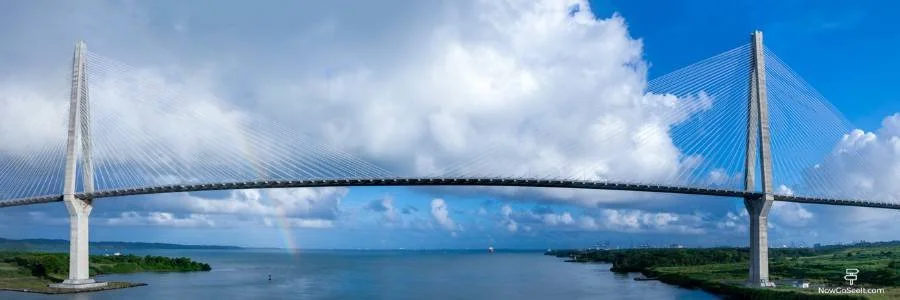
Crossing under the bridge marks your official entry into the canal zone from the Atlantic side. It’s one of the first big visuals on a Holland America cruise Panama Canal or any partial transit route heading from the Atlantic.
On the horizon in the distance is the Puente Atlántico, the Atlantic Bridge. The bridge spans the width of the canal, replacing an outdated and inefficient ferry service. The ten-year-old bridge serves as the entrance to the Panama Canal on the Atlantic side.
During this time a very knowledgeable guide began to speak on the ship speaker system for the growing crowd. His narration carried on for most of the day.
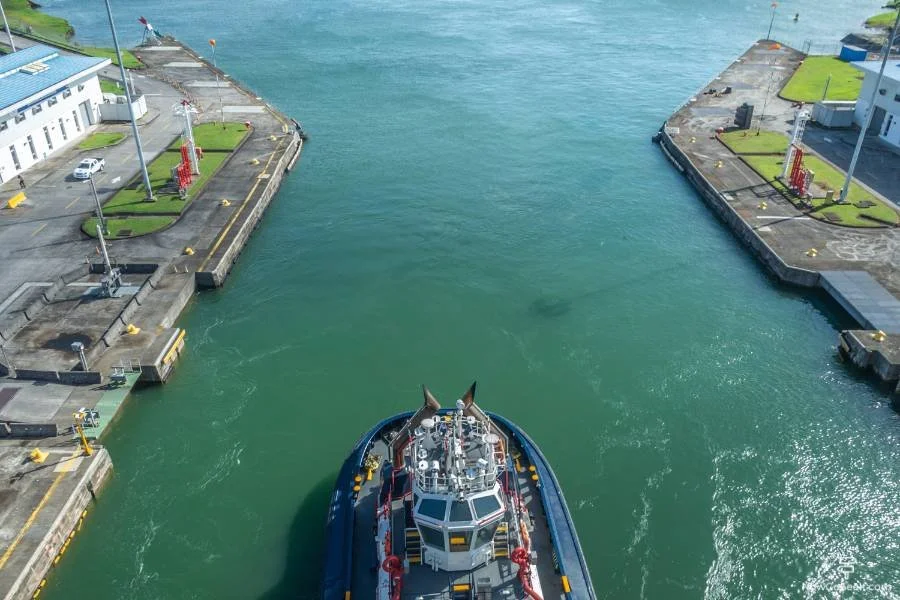
A tiny tug boat tooted its horn as it approached the ship. This little guy would help guide the big ship through the narrow canal.
Panama Canal Locks in Action
The locks are the main event on any sailing through the Panama Canal itinerary—watching a massive cruise ship rise and drop like a bathtub toy is weirder than it sounds. If you're on a Royal Caribbean cruise to the Panama Canal or a Norwegian cruise to th Panama Canal, this is the part where everyone shows up with cameras.
This portion of the canal takes us from the Atlantic Ocean to Gatun Lake, a giant freshwater lake that was created in the early 1900s as part of the original Panama Canal construction. The lake is an important part of the Atlantic to Pacific route.
Our journey through the canal consists of three locks. Each lock fills with water to raise or lower the ship allowing for the difference in elevation and water levels between the Atlantic Ocean and Gatun Lake.
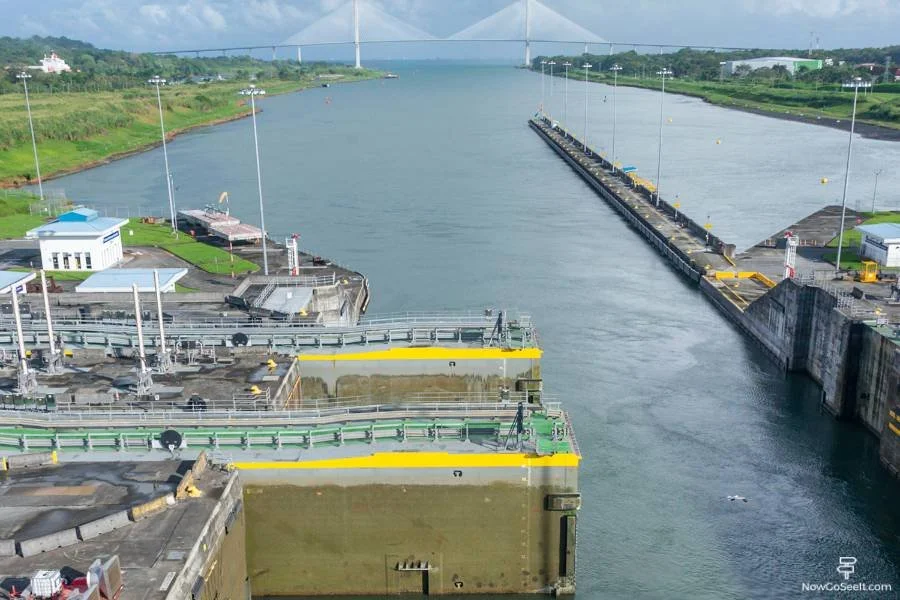
The process is slow and industrial. An alarm sounds and a giant sea wall begins to move across the canal. After a few minutes, the path is sealed and water slowly fills the lock. As it fills the entire ship slowly begins to rise. You can’t feel it, but the entire ship is moving up inch by inch.
Then finally, the lock is full of water and the ship slowly moves forward. The process is repeated twice more before the ship moves out into the grand Gatun Lake. The passage took about three hours.
Panama Canal Excursions Disembarkation
Some Panama Canal cruises from Florida offer excursion disembarkation for partial transits—usually timed around Gatun Lake. It's the only shot to get off the ship during a canal day, but it depends on your itinerary and port clearance.
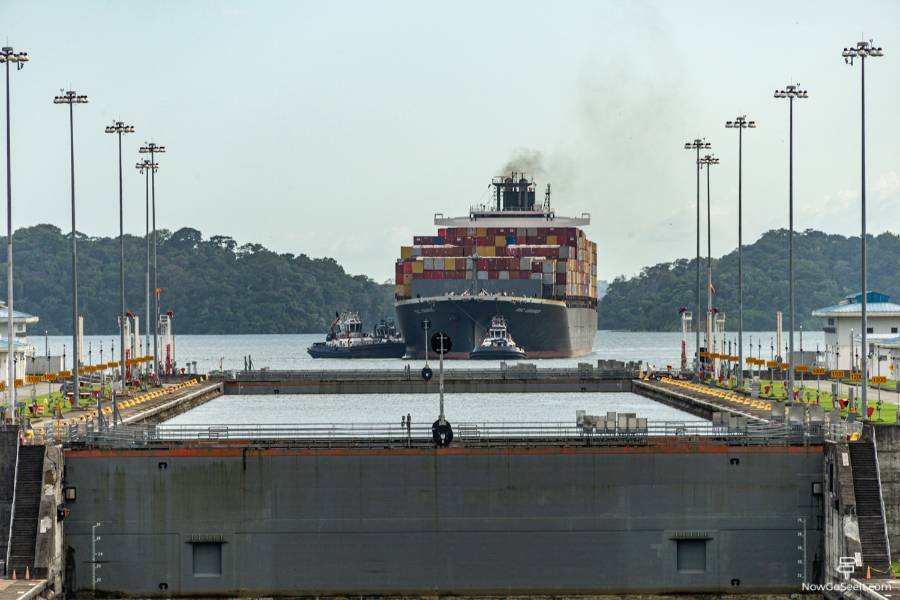
Once in the lake, passengers who booked shore excursions met another smaller boat that would take them on their afternoon adventures. We decided to stay on board since the canal was the attraction, and we just had a three-hour front-row seat to the majesty of industrial innovation without leaving the comfort (and drink package) of the ship.
Returning to the Atlantic Ocean
Re-entering the Atlantic marks the end of a partial Panama Canal transit. This part of the trip feels more like open-water cruising again, especially if you're on a cruise from Miami to the Panama Canal heading back east.
After about four hours of floating around in the lake, our tugboat friend met us again to go back through the canal returning us to the Atlantic Ocean where the day started. The process was repeated through each of the three locks. While slow and arduous the journey is fascinating to experience.
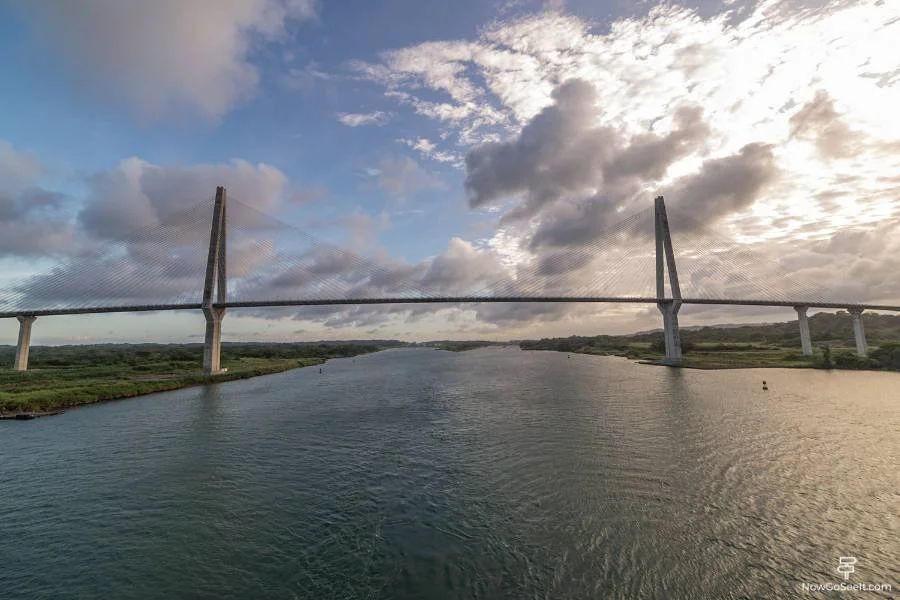
After again passing under the Puente Atlántico we docked in the nearby town of Colón to pick up passengers who took shore excursions from the lake mid-day. We were not allowed to get off the ship here. The crew explained that it was nothing more than a cargo terminal and there was no time allotted to explore Colón.
Panama Canal Cruise Review
A Panama Canal cruise review comes down to whether you're doing it for the engineering or the scenery—both are solid, but one matters more depending on who you ask. Most Panama Canal cruise reviews agree that the best time to cruise the Panama Canal is during dry season, typically December through April.
Overall, we highly recommend this trip. The partial passage allowed us to enter and exit the canal in one day without being on a longer cruise that would travel from the Atlantic to the Pacific. It was also great to be able to experience the canal right from the ship. If we were to do it again, we would probably pay the extra money for a cabin with a balcony so we could experience the canal without leaving our rooms.