Cruise Port of Marseille, France: One Day in Marseille
Now Go See It is reader-supported. When you buy through links on our site, we may earn an affiliate commission.
Plan your one-day Marseille cruise stop with this guide covering port directions, shuttle info, top attractions, and how to make the most of your time in port.
Marseille Cruise Port Guide: (Jump To)
How To Get To Marseille From The Cruise Port
From the Marseille cruise terminal (Marseille Provence Cruise Terminal), follow the painted green line to the cruise port shuttle bus—it’s a 15–20 minute ride to the city center, dropping beside Cathédrale La Major at the Old Port (Vieux-Port de Marseille). Taxis and rideshares are available, but the shuttle from the Port of Marseille cruise terminal is the quickest budget route from the Marseille cruise port to the Old Port.
From your ship at the Marseille Provence Cruise Terminal, follow the painted green line 5–12 minutes to Gate 4 for the free port shuttle that runs on cruise-call days. The bus drops at Place de la Joliette between Les Terrasses du Port and the maritime station; from there it’s about a 25-minute walk to the Old Port, or 10–15 minutes by local bus or taxi depending on traffic.
If you prefer metro, ride M2 from Joliette to Vieux-Port (one stop via Saint-Charles with a change to M1, or simply walk if you want to pass MuCEM and Fort Saint-Jean). Public bus 35T also serves Gate 4 on cruise days; the stop name is “Terminal Croisières.”
If you’re tight on time a rideshare or taxi from Joliette to Vieux-Port is the fastest door-to-door option. Return to your ship the same way: metro or bus back to Joliette, then the free shuttle through Gate 4. This routine makes Marseille one of the easier big-city cruise calls for DIY sightseeing.

Is Marseille Safe?
Visiting the Marseille cruise port with limited time? Here are practical tips for busy zones around Vieux-Port and La Joliette so your Marseille port day runs smoothly.
Tourist areas such as the Old Port, Le Panier, La Joliette, MuCEM/Fort Saint-Jean, and Palais Longchamp see steady foot traffic and are the right places to focus your limited port time. Petty theft can happen in crowds and on the metro, so carry a zipped, cross-body bag, keep phones in front pockets, and avoid setting valuables on café tables or bench backs. If a “free” bracelet or ring appears, decline and keep moving—common travel scams thrive in busy squares. Save exploration of far-north districts for another trip; they’re far from cruise-day sights and not worth the transit. If you need help, France’s emergency numbers are 17 (police), 15 (medical), and 18 (fire); hearing-impaired travelers can text 114. Marseille’s tourism office publishes simple street, beach, and transport precautions—skim them before you go so you can focus on the fun parts of the day.

About Marseille, France
Planning the Marseille cruise port (Marseille Vieux Port) in one day? Use this Marseille port guide to hit Vieux-Port highlights and get back to the ship on time.
Marseille began as the Greek colony of Massalia around 600 BC and grew into France’s gateway to the Mediterranean, which explains why so many neighborhoods feel shaped by the sea. Today it’s the country’s second-largest urban area and the largest commercial port, with museums, street art, and promenades sitting next to working docks and fishing coves.
The city’s European Capital of Culture year in 2013 accelerated waterfront projects like MuCEM and public spaces around the Old Port. Base yourself at Vieux-Port, Le Panier, or La Joliette, which cluster many of the city’s headline sights within a short hop of the cruise shuttle.
From Marseille you can reach Aix-en-Provence, Cassis, Les Baux, and Arles without wasting time on long transfers, making it a powerful day-trip hub. That mix—historic port, compact sightseeing core, and fast regional access—is exactly what makes a one-day cruise stop productive.
If you’re chasing viewpoints, expect big hills; if you’re chasing food, expect seafood first and Provençal flavors everywhere. Bring a wind layer from fall to spring as the mistral can whip across the harbor. For a quick primer on the city’s origins and its 26 centuries of maritime history, start at the Old Port and read the origin story of Massalia before you head out.

How To Get Around Marseille, France
Most sights cluster near marseille vieux port with fast connections by metro, tram, and bus. This marseille port plan favors short transfers and simple routes back to Vieux-Port.
Marseille is compact once you reach Vieux-Port and La Joliette, but hills mean you’ll mix walking with transit. RTM runs two metro lines (M1/M2), three tram lines, an extensive bus network, and seasonal ferry-boats across the harbor; tickets are contactless and validate on each boarding. For cruise days, the 24-hour pass (about €5.20) is excellent value—unlimited on metro, tram, bus, and the little ferry-boat line, and you can pay by contactless bank card at validators. RTM’s 7-day pass (about €15.50) is overkill for one day but useful if you’re staying on in Marseille.
Many cruise passengers enjoy the ease of the Hop-on Hop-Off Bus tour. It’s a great way to see the city’s top attractions at a fair price.
Metro currently closes earlier midweek during the rolling train renewal program, but Friday–Sunday and event nights run later; check the RTM page for updates before sailing. Marseille’s ferry-boats and seasonal maritime shuttles add scenic hops from the Old Port to l’Estaque and Pointe-Rouge/Les Goudes if schedules match your call. Grab the RTM network PDF and the city’s “Move around” page on your phone so you can pivot quickly if a tram or metro is crowded.
Things To See at The Marseille Cruise Port
Start at the Marseille Cathedral (Cathédrale La Major), wander Le Panier to La Vieille Charité, then head for the Old Port of Marseille (Marseille Old Port / Vieux-Port de Marseille) for lunch and people-watching. Finish at Palais Longchamp and the hilltop Notre-Dame de la Garde for sweeping views over the cruise ship port of Marseille, France.
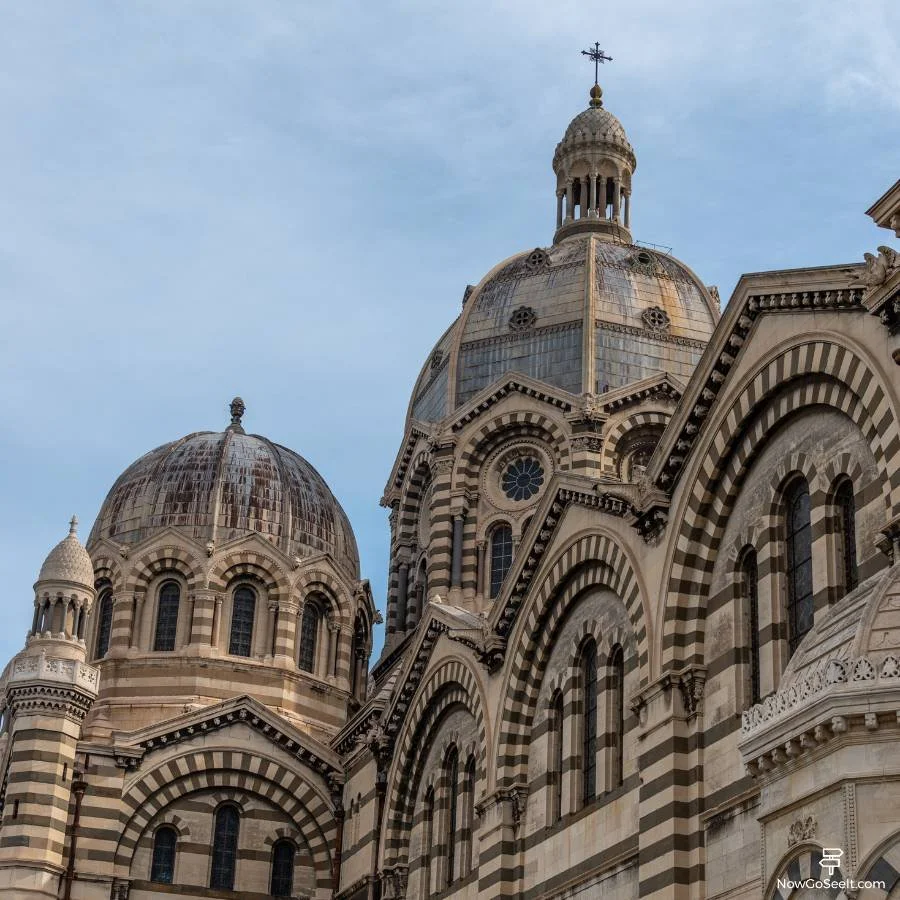
Visit the Marseille Cathedral (Cathédrale La Major)
Map: Google Maps
Website: Link
The 19th-century neo-Byzantine cathedral is massive, striped in green and white stone, and anchors the shoreline next to La Joliette. Step inside for floor-to-ceiling mosaics and a cool retreat before tackling the hills of Le Panier. The square outside frames the best long shot of the cathedral’s facade. It’s an easy first stop straight from the port shuttle. Time your visit early to avoid tour groups; mid-day it gets busy when multiple ships call. From here, Le Panier’s lanes start just uphill.
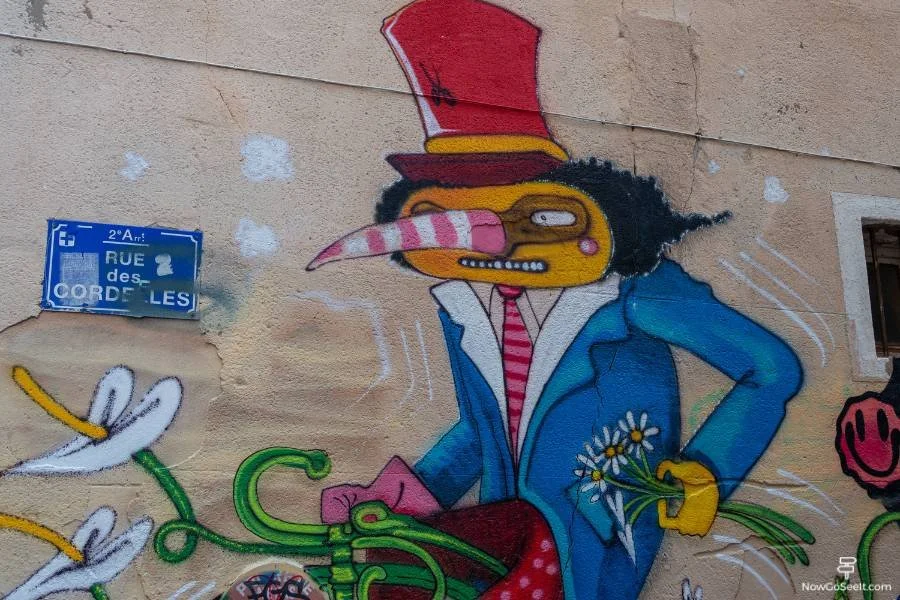
Le Panier District
Map: Google Maps
Marseille’s oldest quarter mixes steep lanes, creative studios, and small cafés, and it’s the quickest way to feel the city’s texture in an hour. Head upward from La Major and keep your eyes on murals and tiled house numbers—tiny details tell big stories here. The terrain is hilly; wear shoes with grip. Le Panier is safe by day, but mind pockets in crowds. Use Place des Moulins and Place des Pistoles as anchors to avoid backtracking. If you’re short on time, walk downhill via Rue Caisserie to rejoin the waterfront for MuCEM.
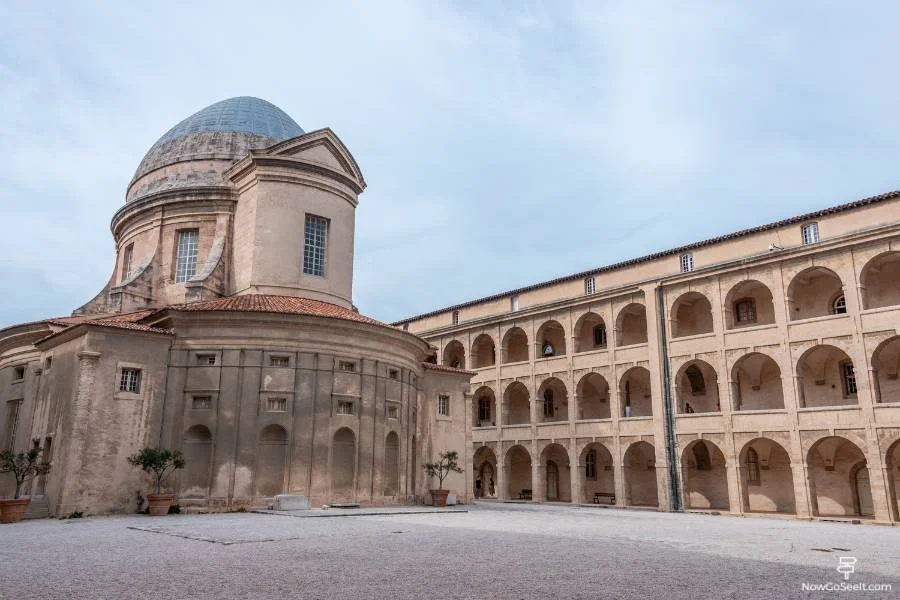
Visit the La Vieille Charité
Map: Google Maps
Website: Link
This 17th-century former almshouse is now a museum complex with a serene arcaded courtyard and a domed chapel at the center. The Museum of Mediterranean Archaeology and the Museum of Art of Africa, Oceania, and the Americas rotate interesting exhibits, but many visitors come simply for the architecture. The site pairs well with a Le Panier loop before you descend to the waterfront. Allow 30–45 minutes on a tight cruise schedule. The complex often hosts temporary shows—check hours if you want to go inside. The courtyard offers welcome shade on hot days.
MuCEM – Museum of European and Mediterranean Civilisations
Map: Google Maps
Website: Link
Tickets: GetYourGuide (Skip The Line)
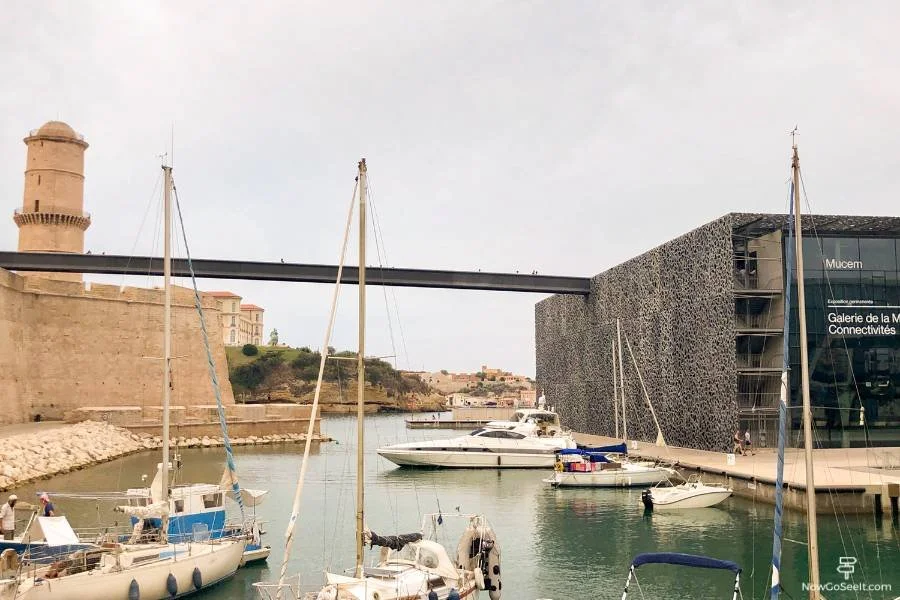
Opened for the 2013 Capital of Culture year, MuCEM’s lace-like exterior and rooftop footbridges connect to Fort Saint-Jean for some of the city’s most dramatic harbor views. If you’re short on time, access the outdoor ramparts and bridges for free scenery and photos; exhibits are excellent but can fill a whole afternoon. The footbridge to Fort Saint-Jean feels like a ship’s gangway, with sea on both sides. Early morning or late afternoon light is best for photos. The plaza around MuCEM also links to the ferry-boat and harbor paths.

Fort Saint-Jean
Map: Google Maps
Website: Link
This restored 17th-century fort overlooks the harbor mouth and ties directly into MuCEM’s terraces. Walk the ramparts for sweeping views toward If and the Frioul islands. The fort’s gardens offer breezy spots when the sun is high. Orientation panels help you map the coastline before you pick your next stop. Combine with MuCEM for one extended waterfront visit. The bridges make this an easy in-and-out if you’re racing a sail-away time.
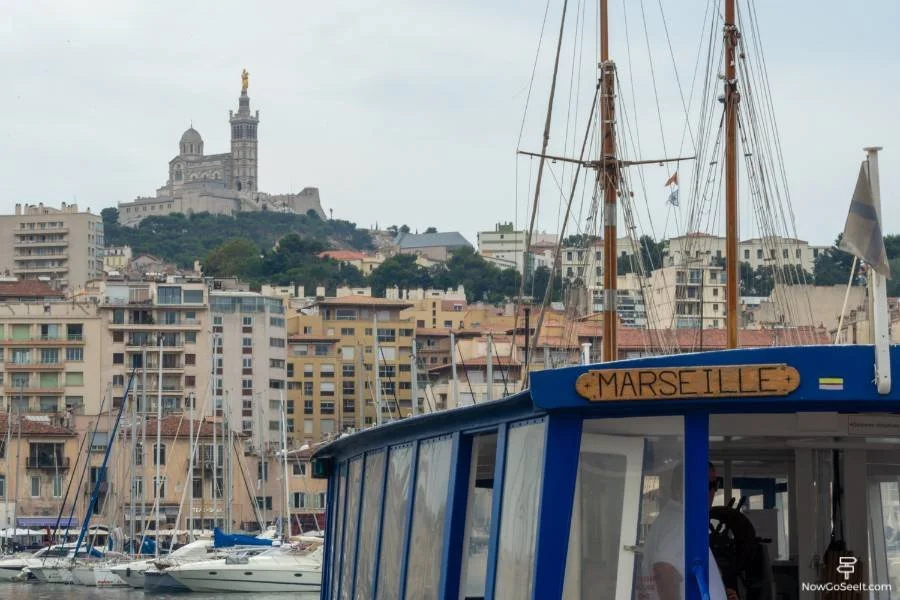
See the Old Port of Marseille (Vieux-Port)
Map: Google Maps
If you arrive early enough you can view the daily morning fish sale. It’s a spectacle that has been going on in this port for generations. The port is the crossroads of the city. You can grab a table at any of the local restaurants for some lunch and people-watching. Watch the morning fish market along the quay, then swing by the mirrored canopy (Ombrière) for a fun reflection shot. Cafés here are convenient but a touch pricier; eat one block back for better value. From Vieux-Port, you can hop the metro, tram, or ferry-boat quickly. If a mistral blows, expect whitecaps and bring a layer. Late afternoon light on the harbor makes an easy last stop before the shuttle.
Once you’ve finished lunch, locate the Vieux Port metro station. Take a moment to ponder the inclusion of a fish tank in the station then catch the train toward La Rose. Stay on board for about six minutes, getting off at the Cinq Avenues Longchamp station.
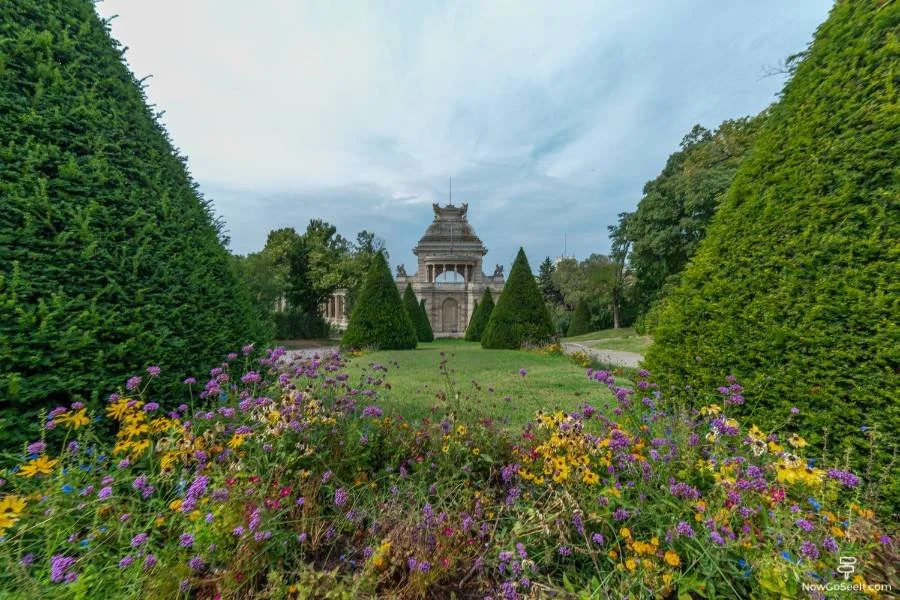
Enjoy Palais Longchamp
Map: Google Maps
Website: Link
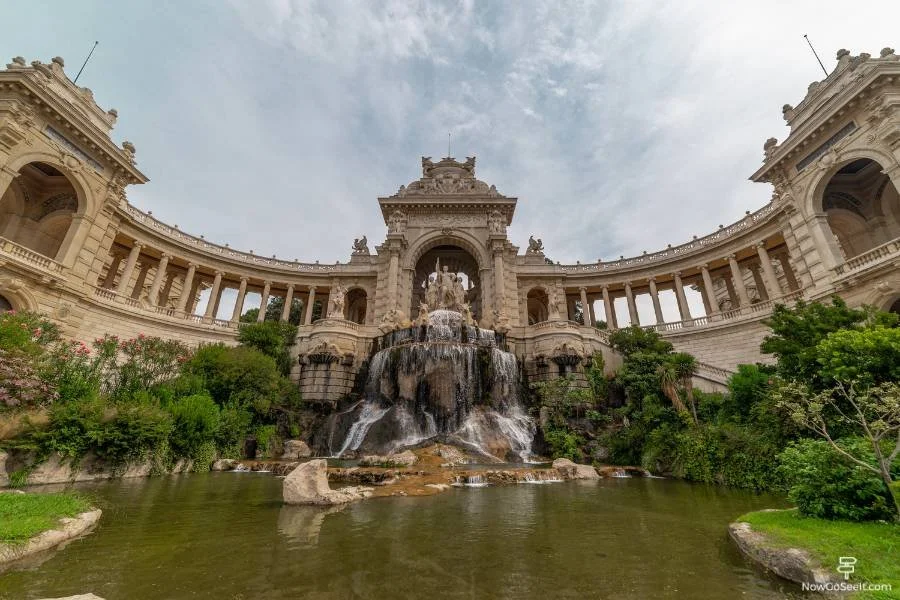
Built to celebrate the 19th-century canal that finally brought abundant fresh water to Marseille, this monumental fountain and colonnade is a spectacle from every angle. The backside stairs rise to a viewpoint over the city, while the adjacent park and museums (fine arts and natural history) offer quick stops if you have time. The metro drops you a short walk away; budget 45–60 minutes including photos. It’s one of the few places where architecture, city history, and green space come together efficiently on a cruise timeline. Go earlier in summer to avoid harsh sun on the facade.
Here you can also access two city museums, Musée des beaux-arts de Marseille (art) and Muséum d'histoire naturelle de Marseille (natural history).
Musée des beaux-arts de Marseille (Art)
Map: Google Maps
Website: Link
Housed in one wing of Palais Longchamp, this compact fine-arts museum makes an easy add-on to your Marseille cruise day. Galleries focus on 16th–19th-century painting and sculpture with strong Provençal representation, so you’ll see how Marseille and the wider Mediterranean show up on canvas. Look for works tied to the port, regional light, and everyday scenes rather than only royal portraits. The city’s own Pierre Puget appears in sculpture and drawings, anchoring the local angle. Rooms are human-scale, which keeps a visit efficient when you’re balancing shuttle timings. If you’re short on time, sample one floor and then head outside for photos of the monumental fountain and colonnade. The setting alone is worth a few extra minutes before you move on.
Muséum d'histoire naturelle de Marseille (Natural History)
Map: Google Maps
Website: Link
In the opposite wing of Palais Longchamp, the natural history museum delivers a fast, family-friendly circuit through regional geology, paleontology, and wildlife. Expect classic display cases with mineral collections, skeletons, and taxidermy that connect Marseille to the Camargue, the Mediterranean, and beyond. It’s a practical stop on hot or windy days when you want an indoor break without leaving the Longchamp complex. Wayfinding is simple, and the route flows back to the terrace for easy photos over the fountains. Kids tend to lock onto the big bones and the animals; adults appreciate how the exhibits frame the area’s landscapes. If you’re tight on time, do the paleontology rooms first, then the Mediterranean fauna section. Count on 30–40 minutes for a focused loop.
Marseille History Museum (Musée d’Histoire de Marseille)
Map: Google Maps
Website: Link
Under the Centre Bourse shopping complex, this well-curated museum traces 2,600 years of local history with a real Roman road outside in the Garden of the Vestiges. Exhibits are labeled in multiple languages and cover everything from Massalia’s founding to modern port life. If you only have 30 minutes, prioritize the ancient harbor section and the outdoor ruins. It’s a strong rainy-day option. The location between Vieux-Port and the tram is ideal when you’re zig-zagging the core. Families appreciate the clear timelines and models.
Pull up your favorite rideshare app, or hail a cab to our next destination. You’re going to Notre-Dame de la Garde. The locals have a more familiar name for the cathedral: Tell the driver to take you to la Bonne Mère (French for 'the Good Mother’).
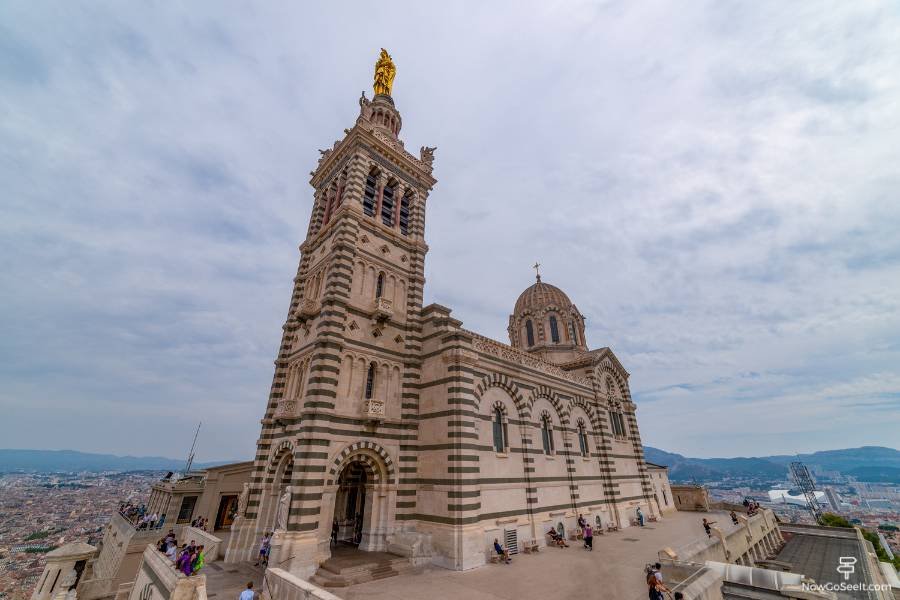
Visit The Hilltop Notre-Dame de la Garde
Map: Google Maps
Website: Link
The hilltop basilica is the city’s compass needle. Inside are ship models, ex-votos, and intricate mosaics; outside is a 360-degree view across the Old Port, islands, and hills. It’s steep on foot, so pair a taxi up with a walk or bus down if time is tight. Midday can be crowded—mornings often flow faster. This is the spot for your wide harbor panorama before heading back to Joliette.

By now, you’re probably getting anxious about making it back to the ship in time for the departure. Hail another taxi or rideshare and take it back to either your ship or the shuttle drop-off point to return aboard.
If you have more time or are looking for some alternative ideas Marseille has much more to offer.

Château d’If and the Frioul Islands
A short boat ride from the Old Port puts you at the prison-fort made famous by Dumas’ “The Count of Monte Cristo,” and the neighboring Frioul archipelago adds coves and walking paths. Boats are weather-dependent; in rough seas departures can pause, so check before you commit. If time is tight, ride over, explore the ramparts, and catch the next boat back for the harbor view alone. On clear days, this is a top photo run. Bring wind protection on deck and expect spray.
Cosquer Méditerranée
This modern museum recreates a now-submerged Paleolithic cave discovered off Marseille’s coast, with an immersive descent and detailed replicas of prehistoric art. It’s a unique Marseille-only experience you won’t find elsewhere on a Mediterranean route. The timed visit runs about 70–90 minutes door-to-door. Book ahead if several ships are in port. The setting at Villa Méditerranée places you steps from MuCEM and Fort Saint-Jean. Kids and adults both come out buzzing about the underwater lift and the artwork.
Cours Julien street art area
A few metro stops or a 20-minute uphill walk from Vieux-Port, this quarter showcases murals, indie shops, and outdoor terraces. The art turns over frequently, so every visit is different. Go midday when studios and cafés are open; evenings skew livelier. Keep phones zipped when you’re taking photos in crowds. The nearby Notre-Dame-du-Mont stop makes transit simple back to the port. If you collect street-art snaps, this is where you’ll fill your camera quickly.

Abbaye Saint-Victor
One of Marseille’s oldest religious sites watches over the Old Port from the south bank. Step inside for crypts and thick stonework that contrast with the city’s bright shoreline. The bakery nearby is known for Navettes, a local orange-blossom biscuit, making a good snack stop. Combine with the short ferry-boat crossing or a walk along the quays. It’s a quick visit with strong historic weight in a compact footprint. You’ll exit pointed straight toward MuCEM across the water.

Corniche Kennedy
This coastal road links city beaches with high sea views; it’s the place to watch waves crash on windy days and to trace the shoreline toward Les Goudes. The benches and outlooks are frequent, so you can break up the route into short, picture-heavy segments. Sunset can glow here, but plan transit back to Joliette with buffer time. On hot days the sea breeze helps. It pairs well with Prado beaches and Parc Borély if you have a second day. The path is exposed, so bring sunscreen and water.
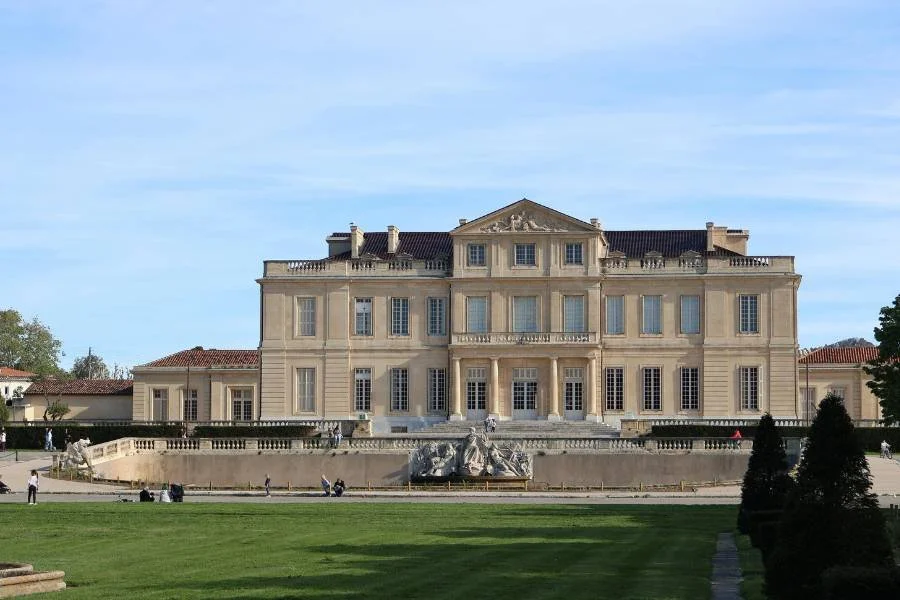
Parc Borély and Château Borély
A landscaped park with a lake, gardens, and a stately house that now holds a decorative arts museum, Parc Borély gives you classic French greenery without leaving the city. It’s flat and easy, useful when you want a calmer hour between museum hops. The beach sits a short walk away if you want a quick toe-dip. Combine with the tram or bus toward Prado. Families rate it highly for space to move after a ship morning. The château’s exhibitions are compact and manageable on a tight schedule.
Orange Vélodrome stadium tour
Home to Olympique de Marseille, the stadium runs tours that take you into stands, locker rooms, and pitch-side tunnels. Even non-football fans tend to enjoy the backstage walk. It’s a bit farther from the Old Port, so plan metro time via Rond-Point du Prado. Check match days as tours may be limited. The shop has team gear if you like souvenir scarves. Photo ops are plentiful in the upper tiers.
Les Docks Village
Next to the cruise-shuttle drop area in La Joliette, this 19th-century dock complex is now a stylish retail and dining hub. It’s a convenient coffee or lunch stop before heading deeper into the city. The vaulted interiors and brick arcades make quick photos. You’re steps from the metro and bus lines here. It’s also useful as your final restroom/coffee stop before returning to Gate 4. Keep an eye on the time; the shuttle back is simple from nearby.
Best Cruise Ship Shore Excursions at the Port of Marseille, France
Best Marseille shore excursions for cruise passengers. Cassis and the Calanques, Aix-en-Provence, Avignon, Arles, Camargue, and more day trips.
Aix-en-Provence old town and markets
Thirty minutes north, Aix delivers Provençal squares, fountains, and Cézanne sites without long transfers. Wander Cours Mirabeau, sample calissons, and dip into the Atelier de Cézanne if time permits. Small-group tours run most days and fit a 6–8 hour call well.
Cassis and Calanques boat cruise
Head east to Cassis, board a boat, and weave into the limestone inlets of the Calanques for cliff-and-sea scenery. Boats can pause in rough seas; schedules vary with wind and swell. Pair with Cap Canaille for one of the Mediterranean’s tallest sea-cliff views before returning.
Avignon and Pont du Gard
See the Papal Palace courtyards and the Rhône riverfront, then swing by the Roman aqueduct at Pont du Gard. The combination packs medieval and classical hits in one loop. Summer heat can be intense, so carry water and a hat.
Arles and Roman heritage
Walk the arena and theater, then connect Van Gogh locations with Roman stones in a compact core. Add the Fondation LUMA if modern architecture interests you. It’s a great option when you want history density without long indoor lines.
Camargue wetlands and wildlife
West of Arles, the Camargue is known for white horses, black bulls, and pink flamingos in salt marshes. 4x4 safaris and boat tours cover more ground than DIY. Mosquito repellent and sun protection are essential in warm months.
Les Baux-de-Provence and Carrières de Lumières
Explore a clifftop village, then step into an immersive art show projected inside a former quarry. Exhibitions change yearly; check the current program and prebook. It’s a reliable crowd-pleaser across ages.
Luberon villages: Gordes and Roussillon
See stone-built Gordes and the ochre cliffs of Roussillon for color contrasts you’ll remember. Distances add up, so plan an efficient circuit with limited stops. If lavender is in bloom, guides often add a quick viewpoint.
Bandol and Cassis wine tasting
South-facing vineyards near the coast produce structured Bandol reds and crisp whites/rosés perfect with seafood. Cellar visits are compact and pair nicely with a Cassis harbor lunch. Designate a driver or book a tasting tour.
La Ciotat and Route des Crêtes
This coastal route between Cassis and La Ciotat strings together viewpoints above deep blue coves. On windy days, sections may close; guides know the current status. Bring a wind layer for cliff edges.
Martigues canals
Nicknamed “the Provençal Venice,” Martigues offers bridges, quays, and colorful facades close to Marseille. It’s low-stress and photogenic when you want a lighter day. Add a seafood lunch before heading back to the port.
Best Restaurants in Marseille, France
What to eat in Marseille on a cruise day. Where to try bouillabaisse, panisse, half-and-half pizza, and seafood with Provençal flavors.
Bouillabaisse at Chez Fonfon
Map: Google Maps
Website: Link
If you want the classic fish stew done right, reserve at Chez Fonfon and plan the meal into your day; bouillabaisse is a multi-course event and deserves the time. The restaurant’s long reputation rests on proper fish variety and rich broth served separately from the catch. Prices reflect the work involved; share if you’re watching budget and appetite.
Half-and-half pizza at Chez Étienne
Map: Google Maps
Marseille’s signature pie is the “moitié-moitié,” half cheese and half anchovy-tomato, and Chez Étienne has long lines to prove its status. Grab a table, add a green salad, and call it lunch. Simple, salty, and very local.
La Boîte à Sardine
Map: Google Maps
Website: Link
A tiny bistro with daily chalkboard seafood, this spot nails the casual Marseille lunch. Expect a short menu and pescatarian focus. Go early; seats turn quickly and it often sells out.
Épicerie L’Idéal
Map: Google Maps
Website: Link
Part grocery, part lunch counter, Épicerie L’Idéal is where you pick up picnic supplies, olive oils, and generous plates of salads and charcuterie. It’s a great one-stop for souvenirs that actually get used. No reservations and quick service fit a port schedule well.
Marseille, France Cruise Port Map
Map your arrival with Port de Marseille Porte 4 details and Marseille Provence cruise terminal info. Layer in the Marseille Cruise Port free shuttle bus and routes to Marseille Vieux Port.
Use the Marseille Tourism Access to Marseille Cruise Port routes if you want themed loops through Old Town, street art, or seafront. If you prefer hop-on bus orientation, check the Colorbüs route map to see how it links MuCEM, Notre-Dame de la Garde, and Prado. Keep all of these bookmarked before you sail so you’re not hunting for URLs on port day.
Things To See in Marseille:
Marseille Cathedral (Cathédrale La Major)
Museums at La Vieille Charité
Enjoy the Le Panier district
Old Port of Marseille
Palais Longchamp
Notre-Dame de la Garde